If you’re planning a landscaping project, you may be wondering whether mulch or wood chips are the better choice.
Although people often use the terms interchangeably, they are not exactly the same.
Both can help suppress weeds, retain moisture, and improve the appearance of your landscape, but the best option depends on where you’re using them and your long-term goals.
Understanding the differences can help you choose the right material for garden beds, trees, pathways, and larger landscaping projects.
Before purchasing materials, it’s helpful to know exactly how much you’ll need for your project.
→ Mulch Calculator – Imperial & Metric Units
Mulch vs Wood Chips: Quick Answer
Choose mulch if you want:
- cleaner appearance
- finer texture
- easier spreading
- flower bed coverage
- decorative landscaping
Choose wood chips if you want:
- lower cost
- long-lasting ground cover
- pathways
- tree rings
- natural weed suppression
Both have their place.
What’s the Difference?
Mulch
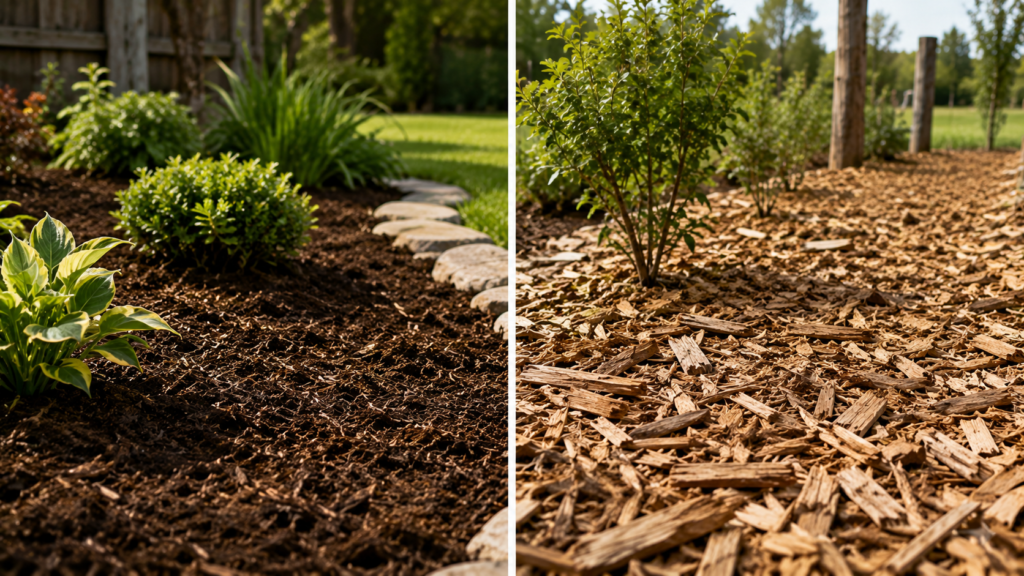
Mulch usually refers to processed landscaping material.
Common types:
- shredded bark
- bark nuggets
- dyed mulch
- compost mulch
- decorative organic mulch
Characteristics:
- smaller pieces
- more uniform
- visually polished
- easier to spread
Wood Chips
Wood chips are rougher, chunkier, less processed.
Usually made from:
- tree trimming debris
- chipped branches
- arborist wood waste
Characteristics:
- irregular sizing
- slower breakdown
- more natural appearance
- often cheaper
Best Uses for Mulch
Mulch works best for:
Flower Beds
Why:
- polished appearance
- weed suppression
- moisture retention
- easier maintenance
Around Shrubs
Good because:
- clean look
- decorative finish
- easy top-offs
Front Yard Landscaping
Best when aesthetics matter most.
Best Uses for Wood Chips
Wood chips shine in:
Garden Pathways
Why:
- durable
- inexpensive
- slower decomposition
- excellent weed barrier
Around Trees
Wood chips are often one of the best choices.
Benefits:
- mimic forest floor
- retain moisture
- improve soil over time
- inexpensive in larger quantities
Large Natural Areas
Ideal for:
low-maintenance zones
wooded lots
natural landscaping
Cost Comparison
Typical ranges:
Mulch:
$3–$8 per bag
or
$30–$70+ per cubic yard
Wood chips:
Often:
free to low cost from arborists
or
$15–$40 per cubic yard
Wood chips usually win on price.
Appearance Comparison
Mulch:
Pros:
- cleaner
- uniform
- decorative
- available in colors
Wood chips:
Pros:
- natural rustic appearance
- woodland look
If curb appeal matters:
Mulch usually wins.
Longevity
Mulch:
- breaks down faster
- may need annual refresh
Wood chips:
- longer-lasting
- slower decomposition
- fewer top-offs
For durability:
Wood chips win.
Weed Suppression
Both suppress weeds well if applied correctly.
Recommended depth:
2–4 inches
Wood chips often perform slightly better because of chunkier coverage.
Vegetable Gardens: Which Is Better?
For vegetable beds:
Generally choose:
- straw
- compost
- shredded leaves
Wood chips:
better for pathways
Traditional landscape mulch:
usually not ideal directly around annual vegetables
Potential Downsides
Mulch
Possible issues:
- higher cost
- fades over time
- dyed products may be less desirable for edible gardens
Wood Chips
Possible issues:
- rough appearance
- harder to spread evenly
- can look messy
- fresh chips may temporarily affect surface nitrogen
Quick Rule of Thumb
Choose mulch for:
- flower beds
- front yard landscaping
- decorative projects
Choose wood chips for:
- tree rings
- pathways
- budget landscaping
- large coverage areas
Helpful Gardening Guides
→ Mulch vs Compost: What’s the Difference?
→ Best Mulch Depth for Flower Beds, Trees, and Vegetable Gardens
→ Best Mulch for Vegetable Gardens (What Actually Works)
→ Bagged Mulch vs Bulk Mulch: Which Saves More Money?
→ How Much Mulch Do I Need Around Trees?