Using the right mulch depth can make the difference between healthier plants and expensive landscaping mistakes.
Too little mulch won’t suppress weeds or retain moisture effectively. Too much mulch can suffocate roots, trap excess moisture, and even harm trees and garden plants.
The ideal mulch depth depends on where you’re using it.
Before buying mulch, it’s helpful to know exactly how much material your project will require.
→ Mulch Calculator – Imperial & Metric Units
General Rule for Mulch Depth
For most applications:
- 2 inches: light coverage / decorative mulch
- 3 inches: ideal for most flower beds and landscaping
- 4 inches: heavier weed suppression / moisture retention
- Avoid exceeding 4 inches in most situations
Different plants and areas need slightly different depths.
Best Mulch Depth for Flower Beds
For flower beds:
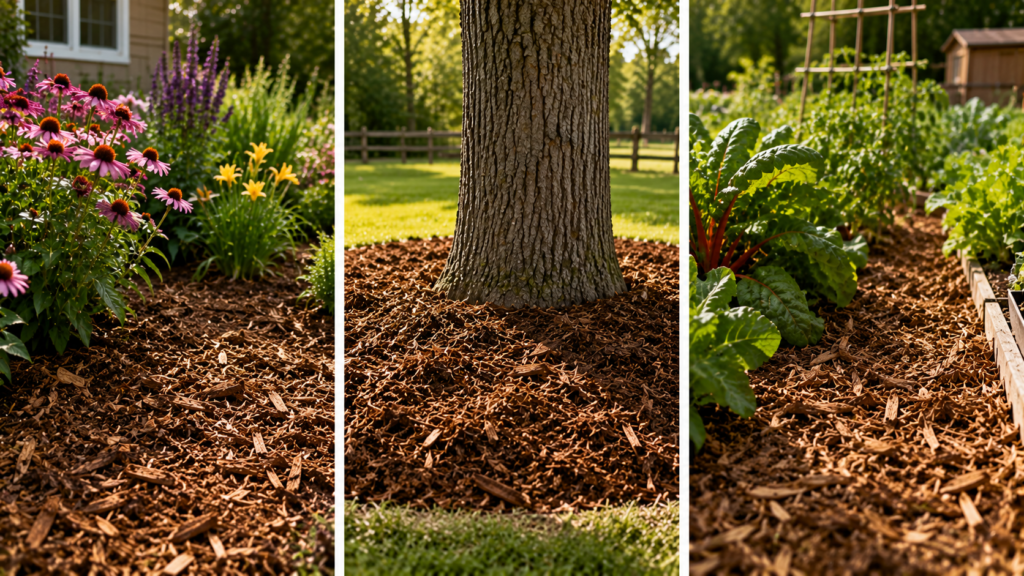
Recommended depth: 2–3 inches
This gives enough coverage to:
- reduce weeds
- hold moisturer
- egulate soil temperature
- improve appearance
For annual flower beds:
2 inches is often enough
For perennial beds:
3 inches usually works best
Too much mulch around flowers can hold excess moisture and encourage root problems.
Best Mulch Depth Around Trees
For trees:
Recommended depth: 2–4 inches
Key rule:
Never pile mulch against the trunk.
This creates the dreaded “mulch volcano” effect that can cause:
- trunk rot
- fungal disease
- insect problems
- root stress
Best practice:
- 2–4 inches deep
- keep mulch 3–6 inches away from trunk
- extend mulch ring outward as far as practical
Wider mulch rings are usually better than deeper mulch.
Best Mulch Depth for Vegetable Gardens
Vegetable gardens need slightly different mulch strategies.
Recommended depth: 1–3 inches
Examples:
Straw mulch
2–4 inches
Great for:
- tomatoes
- peppers
- squash
- strawberries
Wood mulch
1–2 inches
Better for pathways than directly around some vegetables.
Wood mulch can temporarily tie up nitrogen as it breaks down.
Compost mulch
1–2 inches
Ideal for:
- feeding soil
- moisture retention
- improving soil structure
For raised beds, compost often works better than decorative wood mulch.
Best Mulch Depth for Landscaping Beds
For general landscaping:
Recommended depth: 3 inches
This is usually the sweet spot.
Benefits:
- strong weed suppression
- moisture conservation
- clean visual appearance
- reduced soil erosion
If fighting aggressive weeds:
up to 4 inches may help
But avoid going deeper unless specifically needed.
How Much Mulch Does That Actually Equal?
Example:
A 10 ft × 10 ft flower bed at 3 inches deep:
Formula:
10 × 10 × (3 ÷ 12) = 25 cubic feet
That equals roughly:
- 10 bags (2 cu ft)
- 17 bags (1.5 cu ft)
- about 0.93 cubic yards
For larger projects, bulk mulch often makes more sense.
Common Mulching Mistakes
Using too little
1 inch often looks nice but doesn’t do much long term.
Using too much
More than 4–5 inches can:
- suffocate roots
- trap moisture
- encourage fungal growth
- attract pests
Mulch volcanoes
One of the biggest landscaping mistakes.
Mulch should never touch tree trunks.
Using the wrong mulch type
Decorative bark mulch is not always best for vegetable beds.
Choose mulch based on plant type and purpose.
Bagged Mulch vs Bulk Mulch
Bagged mulch
Best for:
- small flower beds
- touch-up jobs
- convenience
Pros:
- easy transport
- cleaner
- easy measuring
Cons:
- higher cost
Bulk mulch
Best for:
- large beds
- landscaping
- multiple trees
- big garden projects
Pros:
- cheaper per cubic foot
- fewer trips
- easier for big jobs
Cons:
- delivery fees
- more labor
Rule of thumb:
If you need more than 1 cubic yard, bulk is often cheaper.
Use a Mulch Calculator Instead
Manual math works—but calculators prevent overbuying.
Our Mulch Calculator – Imperial & Metric Units helps estimate:
- cubic feet
- cubic yards
- liters
- bag counts
- bulk mulch needs
Ideal for:
- flower beds
- trees
- landscaping
- vegetable gardens
- raised beds
Helpful Gardening Guides
→ How Much Mulch Do I Need Around Trees?
→ Best Mulch for Vegetable Gardens (What Actually Works)
→ Mulch vs Compost: What’s the Difference?
→ Mulch vs Wood Chips: Which Is Better for Landscaping?
→ Bagged Mulch vs Bulk Mulch: Which Saves More Money?