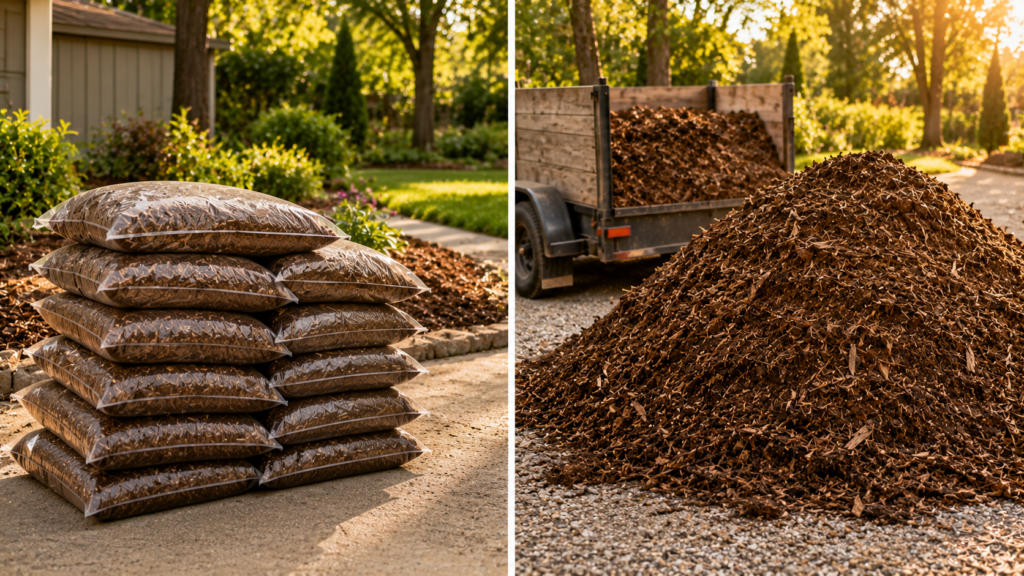
Bagged mulch and bulk mulch can both be effective options, but the cost difference can be significant depending on the size of your project.
For small garden beds, bagged mulch is often convenient and easy to transport. For larger landscaping projects, bulk mulch can save a surprising amount of money.
The best choice depends on how much mulch you need, delivery costs, and local pricing.
Before comparing costs, it’s helpful to know exactly how much mulch your project will require.
→ Mulch Calculator – Imperial & Metric Units
Bagged Mulch vs Bulk Mulch at a Glance
Bagged mulch:
Best for:
- small flower beds
- raised beds
- quick weekend projects
- homeowners without a truck
Bulk mulch:
Best for:
- large landscaping jobs
- multiple beds
- tree rings
- full property refreshes
Typical Cost Comparison
Prices vary by region, but bulk mulch is usually much cheaper per cubic foot than bagged mulch.
Bagged mulch typically costs $3–$8 per bag and is commonly sold in 1, 1.5, or 2 cubic foot sizes.
Bulk mulch often costs $25–$60 per cubic yard, with one cubic yard covering 27 cubic feet.
Example
For a project requiring about 25 cubic feet of mulch:
- Bagged mulch: Approximately 13 two-cubic-foot bags at $5 each = about $65
- Bulk mulch: About 1 cubic yard at $40 = about $40
In this example, bulk mulch saves roughly $25 while requiring less packaging and fewer trips to the store.
Hidden Costs to Consider
Bagged mulch hidden costs
Pros:
- no delivery needed
- cleaner handling
- easy to store leftovers
- easier for small projects
Cons:
- more expensive per cubic foot
- multiple store trips
- loading/unloading many bags
- plastic waste
Bulk mulch hidden costs
Pros:
- much lower cost
- fewer trips
- ideal for large coverage
Cons:
- delivery fees
- wheelbarrow labor
- requires driveway space
- less convenient for tiny jobs
When Bagged Mulch Makes More Sense
Choose bags when:
- project is under ~10 cubic feet
- you only need a few bags
- you want less mess
- you don’t have bulk delivery access
- you need different mulch colors/types
Best for:
- small garden beds
- raised beds
- touch-up projects
When Bulk Mulch Wins
Bulk usually makes sense when:
- project exceeds 1 cubic yard
- multiple beds need refreshing
- large tree rings
- landscaping larger areas
Best for:
- full yard projects
- multiple flower beds
- property upgrades
Quality Differences
Bagged mulch:
Often:
- more uniform
- cleaner appearance
- branded consistency
Bulk mulch:
Can vary:
- texture
- moisture content
- wood type
- freshness
Local supplier quality matters.
Is Dyed Mulch Worth Paying Extra For?
Colored bagged mulch often costs more.
Usually:
- black mulch
- brown mulch
- red mulch
These are mostly aesthetic upgrades.
For vegetable gardens:
natural organic mulch is usually the better choice.
Quick Rule of Thumb
Need less than 10 cubic feet?
Bagged mulch usually wins for convenience.
Need more than 1 cubic yard?
Bulk mulch usually wins on cost.
Helpful Gardening Guides
→ Mulch Calculator – Imperial & Metric Units
→ How Much Mulch Do I Need Around Trees?
→ Best Mulch Depth for Flower Beds, Trees, and Vegetable Gardens
→ Best Mulch for Vegetable Gardens (What Actually Works)
→ Mulch vs Compost: What’s the Difference?
→ Mulch vs Wood Chips: Which Is Better for Landscaping?