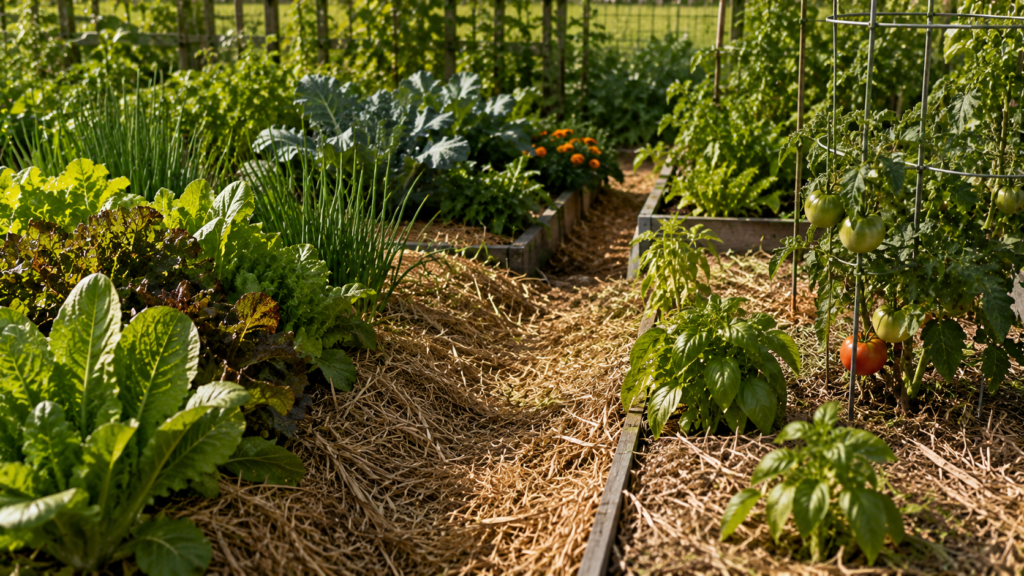
Choosing the best mulch for vegetable gardens can improve moisture retention, suppress weeds, regulate soil temperature, and even improve soil health over time.
But not all mulch is equally suitable for edible gardens.
Some mulches help vegetables thrive, while others can create nutrient issues, attract pests, or make gardening more difficult.
The best choice depends on what you’re growing, your climate, and whether your goal is weed control, moisture retention, or long-term soil improvement.
Before buying mulch, it’s helpful to know exactly how much material your garden will require.
→ Mulch Calculator – Imperial & Metric Units
Why Mulch Matters in Vegetable Gardens
Good mulch helps:
- retain soil moisture
- reduce watering frequency
- suppress weeds
- protect soil from erosion
- regulate soil temperature
- reduce mud splash onto edible plants
- improve soil quality (organic mulches)
For most vegetable gardens, mulch is one of the simplest ways to improve growing conditions.
Best Mulch Options for Vegetable Gardens
Straw
One of the most popular choices for vegetable gardens.
Best for:
- tomatoes
- peppers
- cucumbers
- squash
- strawberries
- raised beds
Pros:
- excellent moisture retention
- suppresses weeds well
- lightweight and easy to spread
- breaks down to improve soil
- keeps vegetables cleaner
Cons:
- can blow around in wind
- cheap straw may contain weed seeds
Best overall for most vegetable gardeners.
Shredded Leaves
An inexpensive, natural mulch option.
Best for:
- fall garden prep
- raised beds
- budget gardeners
Pros:
- free if you have trees
- improves soil structure
- adds organic matter
- earthworms love it
Cons:
- can mat down if applied too thick
- less tidy appearance
Excellent low-cost option.
Compost
Compost works as both soil amendment and mulch.
Best for:
- nutrient-hungry crops
- raised beds
- soil improvement
Pros:
- feeds plants while mulching
- improves soil health
- suppresses weeds moderately
Cons:
- breaks down quickly
- may need reapplication during season
- not ideal for deep weed suppression
Best when soil improvement is the main goal.
Grass Clippings
Fresh untreated grass can work well in moderation.
Best for:
- large vegetable gardens
- budget gardening
Pros:
- free
- adds nitrogen
- easy to apply
Cons:
- can mat together
- may smell if applied too thick
- avoid chemically treated lawns
Apply in thin layers.
Mulch Options to Use Carefully
Wood Chips
Wood chips are excellent in some parts of the garden—but usually not ideal directly around annual vegetables.
Why:
- break down slowly
- can temporarily tie up nitrogen near the surface
- harder to rework each season
Better for:
- garden pathways
- permanent beds
- berry bushes
- fruit trees
Hay
Looks similar to straw—but often creates problems.
Issue:
Hay usually contains seeds.
That means:
more weeds
Choose straw instead whenever possible.
Mulches to Avoid in Vegetable Gardens
Generally avoid:
- dyed decorative mulch
- rubber mulch
- pressure-treated wood products
- unknown commercial landscape mulch
These may contain chemicals or simply offer no benefit to edible gardening.
How Deep Should Mulch Be in Vegetable Gardens?
General recommendation:
2–3 inches
Depth guidelines:
Light layer:
1–2 inches
Best for:
- seedlings
- small plants
- cool weather crops
Standard mulch depth:
2–3 inches
Best for:
- most vegetable gardens
- weed suppression
- moisture retention
Too deep:
4+ inches
Can cause:
- excess moisture
- stem rot
- pest issues
- poor airflow
Keep mulch pulled slightly away from plant stems.
Raised Beds vs In-Ground Vegetable Gardens
Raised beds:
- often benefit from lighter organic mulches
- straw and compost work especially well
In-ground gardens:
- may benefit from slightly thicker mulch
- shredded leaves and straw perform well
How Much Mulch Do You Need?
Coverage depends on:
- bed size
- mulch depth
- mulch type
Example:
A 4×8 raised bed at 2 inches deep:
4 × 8 × (2 ÷ 12) = 5.33 cubic feet
That’s roughly:
- 3 bags (2 cu ft mulch)
- 6 bags (1 cu ft mulch)
Use the calculator for exact estimates.
Best Overall Vegetable Garden Mulch Winners
Best overall:
Straw
Best budget:
Shredded leaves
Best for soil improvement:
Compost
Best for pathways:
Wood chips
Helpful Gardening Guides
→ Best Mulch Depth for Flower Beds, Trees, and Vegetable Gardens
→ Mulch vs Compost: What’s the Difference?
→ Mulch vs Wood Chips: Which Is Better for Landscaping?
→ How Much Mulch Do I Need Around Trees?
→ Bagged Mulch vs Bulk Mulch: Which Saves More Money?