
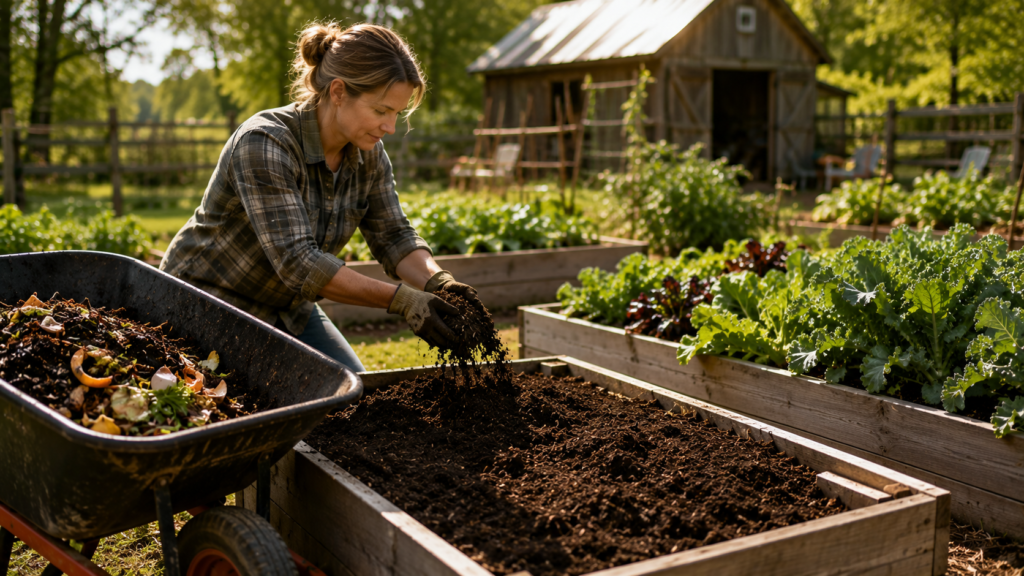
Using compost instead of soil in raised beds might sound like a shortcut to healthier plants, but it is not always the best approach.
Compost is excellent for improving soil structure, increasing organic matter, and supplying nutrients, but raised beds typically perform best with a balanced growing mix rather than pure compost.
The ideal combination depends on what you’re growing, your existing soil conditions, and how the raised bed will be used.
Before filling a raised bed, it’s helpful to understand the role compost should play in a healthy soil mix.
Not sure how much compost your project requires?
→ Compost Calculator – Imperial & Metric Units
Quick Answer
No—most raised beds should not be filled entirely with compost.
Compost works best as a soil amendment, not the only growing medium.
Using too much compost can lead to:
- poor drainage in some conditions
- excessive nutrient levels
- salt buildup (with some compost types)
- settling over time
- overly rich conditions for certain plants
Best practice:
✅ mix compost with quality soil and aeration materials
Why Compost Is Great for Raised Beds
Compost improves:
- soil fertility
- microbial life
- moisture retention
- soil texture
- root development
- long-term soil health
That’s why compost belongs in almost every raised bed.
The key is using the right amount.
What Happens If You Use 100% Compost?
Beds Settle Significantly
Compost continues decomposing.
Over time, pure compost can shrink and settle noticeably.
This means:
- beds lose height
- planting depth changes
- repeated refilling becomes necessary
Nutrient Levels May Become Too High
Compost is nutrient-rich.
Too much can create excess nutrients, especially:
- nitrogen
- phosphorus
- soluble salts (depending on compost source)
This can stress plants instead of helping them.
Drainage Can Become Inconsistent
Some composts hold moisture heavily.Others break down into dense material over time.This may cause:
- soggy roots
- reduced oxygen
- poor root health
Seedlings May Struggle
Young plants can be sensitive to overly rich growing conditions.
Symptoms may include:
- weak starts
- poor germination
- stress during establishment
Better Raised Bed Mix Options
A common balanced approach:
Simple Raised Bed Blend
- 50–60% quality topsoil
- 20–30% compost
- 20–30% aeration material
Examples of aeration materials:
- coarse sand
- pine fines
- perlite
- aged bark fines
When Higher Compost Ratios Can Work
In some situations, higher compost content is acceptable:
- mature beds being refreshed
- topdressing
- established beds
- improving poor soil blends
Even then:100% compost usually isn’t ideal long-term.
Best Plants for Compost-Rich Beds
Many vegetables enjoy compost-rich soil:
- tomatoes
- peppers
- squash
- cucumbers
- lettuce
- brassicas
But balance still matters.
Plants That Prefer Leaner Soil
Some plants dislike overly rich conditions:
- lavender
- rosemary
- thyme
- succulents
- Mediterranean herbs
Final Verdict
Compost belongs in raised beds—but not as the only ingredient. For most gardeners: Compost = ingredient, not the whole recipe. A balanced soil mix creates healthier plants, better drainage, and longer-lasting raised beds.
Helpful Gardening Guides
→ Best Compost for Raised Garden Beds
→ How Much Compost Do I Need for a Raised Bed?
→ Mushroom Compost vs Regular Compost: Which Is Better?
→ Can You Add Too Much Compost to a Garden?
→ How Often Should You Add Compost to a Vegetable Garden?