
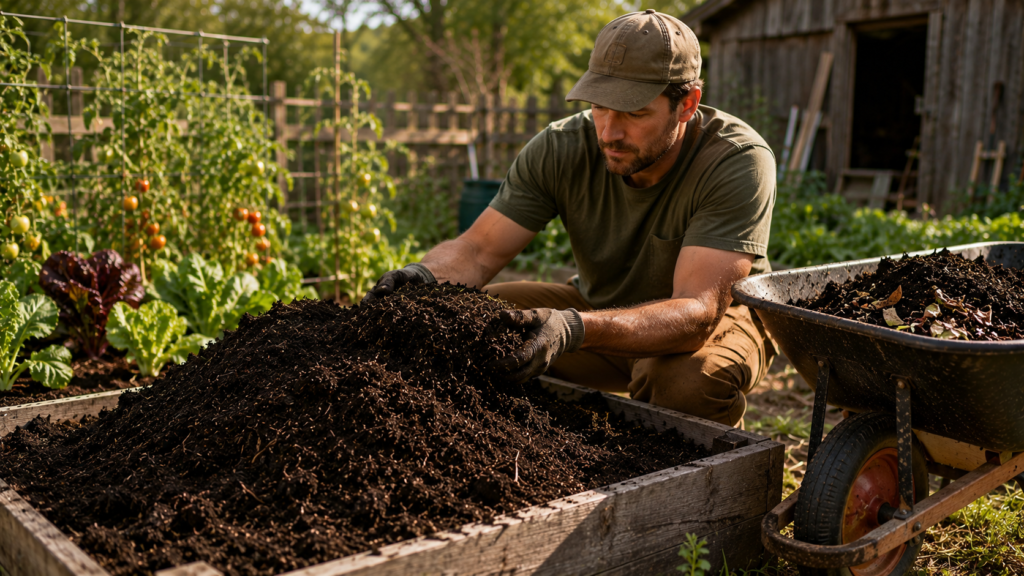
Compost is one of the best things you can add to a garden, but more is not always better.
While compost improves soil structure, adds organic matter, and supports healthier plants, using too much can create unexpected problems.
Excessive compost can contribute to nutrient imbalances, drainage issues, and poor growing conditions for certain plants.
The key is applying enough compost to improve soil health without overwhelming it.
Not sure how much compost your garden needs?
→ Compost Calculator – Imperial & Metric Units
Quick Answer
For most gardens:
✅ 1–2 inches of compost yearly is ideal for maintenance
✅ 2–3 inches can help improve poor soil
⚠️ Repeated heavy applications can cause problems
Too much compost may lead to:
- nutrient imbalance
- excessive phosphorus buildup
- moisture retention issues
- poor seed germination
- overly rich soil for some plants
Compost is beneficial—but balance matters.
Why Compost Is So Good
Compost helps:
- improve soil structure
- increase microbial activity
- boost moisture retention
- improve drainage in some soils
- slowly release nutrients
- support stronger root development
That’s why gardeners love it.
But even beneficial amendments can become excessive.
Signs You May Be Using Too Much Compost
Plants Grow Lots of Leaves but Few Fruits
Overly rich soil can encourage leafy growth while reducing fruit production.
Common example:
Tomatoes with huge green growth but fewer tomatoes.
Seedlings Struggle
Fresh seedlings can struggle in overly rich compost-heavy soil.
Symptoms:
- weak germination
- slow early growth
- root stress
Soil Stays Too Wet
Compost improves moisture retention.
Too much can create soggy conditions, especially in poorly draining beds.
This may lead to:
- root rot
- fungal problems
- reduced oxygen around roots
Nutrient Imbalance
Repeated compost additions can gradually create excess nutrients.
Phosphorus buildup is a common issue.
Too much phosphorus can interfere with nutrient uptake.
Salt Buildup
Some composts—especially manure-based or mushroom compost—may contain higher soluble salts.
Excess salts can stress sensitive plants.
How Much Compost Is Too Much?
There’s no exact universal number, but a common rule:
If compost makes up more than about 30–50% of your total growing medium, problems become more likely.
For raised beds:
Good approach:
- quality topsoil
- compost
- aeration materials
Not:
100% compost
Plants That Dislike Overly Rich Soil
Some plants prefer leaner conditions.
Examples:
- lavender
- rosemary
- thyme
- succulents
- some native plants
Too much compost can lead to weak or floppy growth.
Best Practices for Adding Compost
For existing beds:
Apply:
1–2 inches annually
Work lightly into the top layer or topdress.
For poor soil rehabilitation:
Use:
2–3 inches initially
Then reduce maintenance applications.
For raised beds:
Mix compost into a balanced soil blend rather than filling beds entirely with compost.
Final Verdict
Yes—you absolutely can add too much compost.
Compost is one of gardening’s best tools, but it works best when used in moderation.
For most home gardens:
A little each year beats massive applications.
Healthy soil is about balance, not excess.
Helpful Gardening Guides
→ How Much Compost Do I Need for a Raised Bed?
→ Can You Use Compost Instead of Soil in a Raised Bed?
→ Best Compost for Raised Garden Beds
→ Mushroom Compost vs Regular Compost: Which Is Better?
→ How Often Should You Add Compost to a Vegetable Garden?