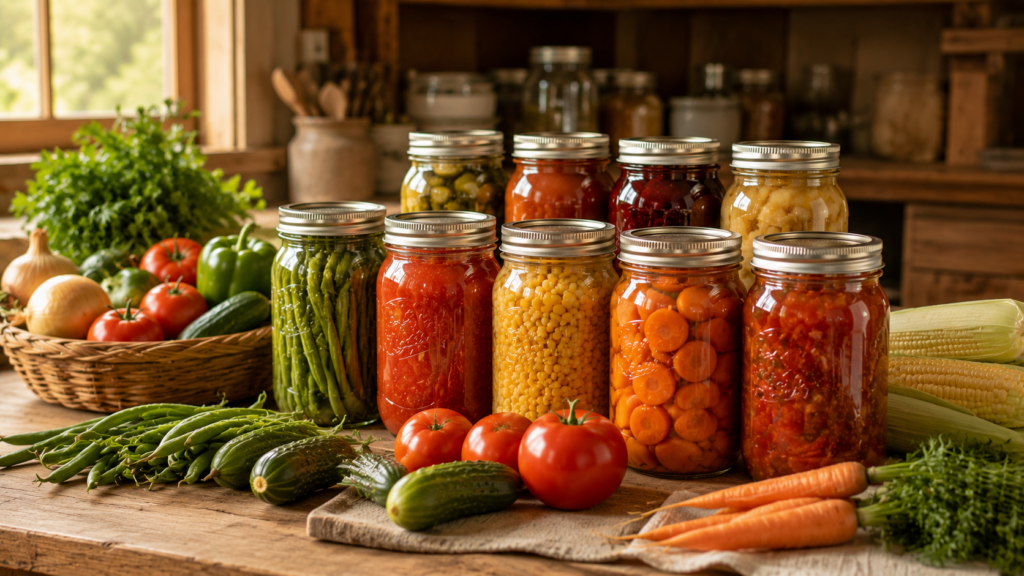
There’s something deeply satisfying about turning a summer harvest into rows of neatly stacked jars. Whether you’re growing a backyard garden or managing a larger homestead, canning is one of the best ways to preserve food for months after the growing season ends.
Some vegetables are far better suited for canning than others. The best canning vegetables produce reliable harvests, preserve well, and have established processing methods that make home canning both safe and practical.
🌱 Estimate jars, freezer containers, dehydrator trays, and preservation yields before harvest season arrives.
→ Harvest Preservation Calculator
Top 10 Vegetables for Canning
1. Tomatoes
Tomatoes are often the first crop gardeners learn to can, and for good reason.
A productive tomato patch can quickly produce more fruit than a family can eat fresh. Canning allows you to enjoy that harvest all year long in the form of crushed tomatoes, diced tomatoes, tomato sauce, salsa, and soup bases.
Tomatoes can be processed in a water bath canner when proper acidity adjustments are used according to tested recipes.
Why they’re great for canning:
- Heavy harvests
- Many recipe options
- Excellent pantry staple
- Beginner-friendly
2. Green Beans
Green beans are one of the most popular vegetables found on pantry shelves across rural America.
Pressure canning allows green beans to maintain good texture while providing a ready-to-use side dish throughout the year.
A few rows of beans can produce dozens of jars during a productive season.
Why they’re great for canning:
- High yields
- Easy preparation
- Excellent long-term storage
- Family favorite side dish
3. Cucumbers
While most people think of pickles rather than cucumbers, pickling remains one of the most popular forms of home food preservation.
From dill pickles to bread-and-butter varieties, cucumbers transform into a shelf-stable product that can last for many months.
Why they’re great for canning:
- Easy for beginners
- Water bath canning friendly
- Many flavor options
- Reliable yields
4. Peppers
Sweet peppers and hot peppers both preserve exceptionally well.
Many gardeners can peppers as pickled peppers, pepper relish, salsa ingredients, or hot sauce bases.
A few pepper plants can provide enough produce for dozens of jars.
Why they’re great for canning:
- Compact plants produce heavily
- Excellent for relishes and sauces
- Adds flavor to many recipes
- Great use for bumper crops
5. Beets
Beets have been a homestead favorite for generations.
Pressure-canned beets retain their flavor well and make a convenient side dish during the winter months.
Pickled beets are another popular option that can be processed using water bath methods.
Why they’re great for canning:
- Long garden storage life
- Good flavor retention
- Excellent pickled or plain
- Traditional homestead crop
6. Carrots
Carrots are another root crop that can be pressure canned successfully.
Home-canned carrots are ready to use in soups, stews, roasts, and side dishes without additional preparation.
Why they’re great for canning:
- Versatile kitchen ingredient
- Reliable harvests
- Stores well
- Easy to use year-round
7. Corn
Sweet corn is often frozen, but pressure canning remains a popular option for gardeners with large harvests.
Fresh home-canned corn can become chowders, casseroles, soups, and side dishes throughout the year.
Why it’s great for canning:
- Excellent use for surplus harvests
- Convenient pantry storage
- Versatile ingredient
- Family favorite
8. Potatoes
Potatoes are one of the most practical vegetables for homesteaders.
While many people store potatoes fresh, pressure canning provides a ready-to-use option for soups, stews, breakfast skillets, and quick meals.
Why they’re great for canning:
- Staple food crop
- Highly versatile
- Saves preparation time
- Excellent emergency food storage
9. Onions
Onions are commonly included in relishes, salsa recipes, soups, and mixed vegetable canning recipes.
Although onions are not typically canned by themselves as often as tomatoes or beans, they play an important role in many preservation projects.
Why they’re great for canning:
- Essential cooking ingredient
- Useful in mixed recipes
- Strong harvest potential
- Great pantry staple
10. Cabbage
Most gardeners think of fermentation first when preserving cabbage, but cabbage also appears in relishes, soups, and mixed vegetable canning recipes.
A single row of cabbage can provide a surprisingly large harvest.
Why it’s great for preserving:
- Large yields
- Multiple preservation options
- Excellent storage crop
- Homestead classic
Which Vegetables Are Best for Beginners?
If you’re new to canning, start with these three:
Tomatoes
Tomatoes are forgiving, versatile, and easy to find tested recipes for.
Cucumbers
Pickles are one of the simplest and most rewarding canning projects for beginners.
Green Beans
Once you’re comfortable using a pressure canner, green beans are one of the easiest vegetables to process.
These crops offer reliable yields and straightforward preservation methods that help build confidence.
How Much Produce Do You Need?
One of the most common surprises for new canners is discovering how much produce it takes to fill a few jars.
As a general guideline:
- Tomatoes: about 3 pounds per quart jar
- Green beans: about 2 pounds per quart jar
- Cucumbers: about 2 pounds per quart of pickles
- Peppers: varies by recipe
- Cabbage: varies by recipe and preparation
Instead of guessing, use the Harvest Preservation Calculator to estimate canning yields before harvest day arrives.
Knowing your expected jar count helps you purchase jars, lids, and storage supplies before the rush begins.
Water Bath vs Pressure Canning
The canning method depends on the vegetable.
Water Bath Canning
Typically used for:
- Pickles
- Acidified tomatoes
- Relishes
- High-acid recipes
Pressure Canning
Required for most low-acid vegetables, including:
- Green beans
- Corn
- Carrots
- Potatoes
- Plain beets
Always follow tested recipes and current food safety recommendations.
Frequently Asked Questions
What is the easiest vegetable to can?
Tomatoes and cucumbers are generally considered the easiest vegetables for beginners because they have many well-tested recipes and straightforward processing methods.
What vegetables should not be water bath canned?
Low-acid vegetables such as green beans, corn, carrots, and potatoes require pressure canning for safe preservation.
How long do home-canned vegetables last?
For best quality, use home-canned vegetables within 12 to 18 months. Properly sealed jars stored in a cool, dark location often remain safe much longer, although quality gradually declines.
How many jars should a beginner buy?
A good starting point is one case of quart jars and one case of pint jars. Most gardeners quickly find uses for both sizes.
Is canning worth it for small gardens?
Absolutely. Even a modest garden can produce enough tomatoes, cucumbers, peppers, or green beans to justify preserving part of the harvest.
Harvest Preservation Guides
→ Best Foods for Dehydrating From Your Garden
→ Canning vs Freezing: Which Preservation Method Is Better?
→ How Long Do Home-Canned Foods Last?
→ Beginner’s Guide to Fermenting Vegetables
→ How Much Freezer Space Do You Need for a Garden Harvest?
→ Harvest Preservation Calculator
Conclusion
Tomatoes, green beans, cucumbers, peppers, potatoes, onions, and cabbage remain some of the best vegetables for home canning because they produce reliable harvests, preserve well, and provide useful pantry staples throughout the year.
Whether you’re preserving a few extra baskets from the backyard or putting away food from a larger homestead garden, canning helps extend the harvest long after the growing season ends. With a little planning and the right supplies, today’s harvest can become tomorrow’s pantry shelf.