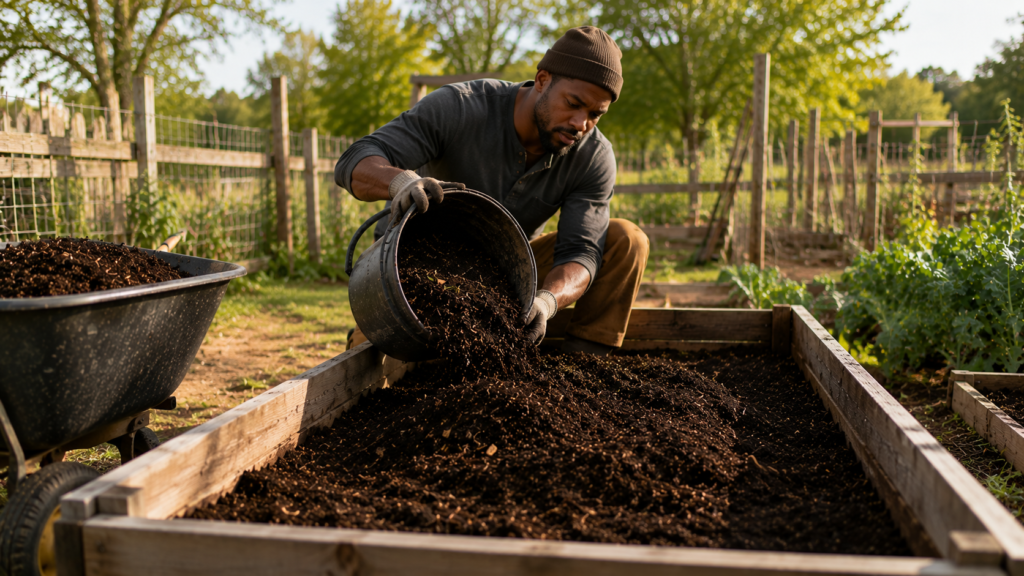
How much compost do you need for a raised bed? Compost is one of the best ways to improve soil structure, boost plant growth, and increase harvests, but figuring out the right amount can be confusing.
Too little compost may not provide enough nutrients or organic matter. Too much compost can create drainage issues or nutrient imbalances for some plants.
The ideal amount depends on how you’re using it, whether you’re filling a new raised bed, improving existing soil, or top dressing during the growing season.
Before buying compost, it’s helpful to know exactly how much material your project will require.
→ Compost Calculator – Imperial & Metric Units
How Much Compost Do You Need?
A general rule:
- New raised beds: 25%–40% compost mixed into the total soil volume
- Refreshing old raised beds: 1–3 inches of compost worked into the top layer
- Top dressing: ½–1 inch across the surface
- Poor soil conditions: up to 50% compost in some cases
Exact needs vary based on bed size and plant type.
Compost for New Raised Beds
When filling a brand new raised bed, compost should be part of your total soil mix—not the only ingredient.
A common raised bed blend:
- 60% topsoil
- 30% compost
- 10% aeration material (perlite, coarse sand, etc.)
Example:
A standard 4×8 raised bed that is 12 inches deep holds about 32 cubic feet of material.
At 30% compost:
32 × 0.30 = 9.6 cubic feet of compost
That equals roughly:
- 13 bags of 0.75 cu ft compost OR
- about 0.35 cubic yards
Compost for Existing Raised Beds
If your raised bed is already established, you usually don’t need a full rebuild.
Instead:
Apply 1–3 inches of compost and mix it into the upper soil layer.
General recommendations:
Light refresh
1 inch
Good for:
- beds that performed well last season
- minor nutrient replacement
- annual maintenance
Moderate refresh
2 inches
Good for:
- average vegetable beds
- beds with noticeable soil settling
- regular replanting
Heavy rebuild
3 inches
Good for:
- tired soil
- compacted beds
- heavy feeders like tomatoes, squash, peppers
How Many Bags of Compost Do I Need?
Most compost is sold in:
- 0.75 cu ft bags
- 1 cu ft bags
- 1.5 cu ft bags
- 2 cu ft bags
Quick example:
A 4×8 bed needing 2 inches of compost:
Volume required:
4 × 8 × (2 ÷ 12) = 5.33 cubic feet
That equals:
- 8 bags (0.75 cu ft)
- 6 bags (1 cu ft)
- 3–4 bags (1.5 cu ft)
Buying bulk is often cheaper for larger projects.
Bulk Compost vs Bagged Compost
Bagged compost
Best for:
- small gardens
- raised beds
- top dressing
- convenience
Pros:
- easy to transport
- cleaner
- consistent sizing
Cons:
- more expensive
Bulk compost
Best for:
- multiple raised beds
- large gardens
- landscaping projects
Pros:
- lower cost per cubic foot
- fewer trips to the store
Cons:
- delivery fees
- requires wheelbarrow/labor
Rule of thumb:
If you need more than 1 cubic yard, bulk compost usually makes more sense.
Can You Use Too Much Compost?
Yes.
Too much compost can:
- retain too much moisture
- reduce drainage
- create nutrient imbalances
- lead to excess salts in some compost products
For most raised beds:
20%–40% compost is the sweet spot.
Best Plants That Love Compost-Rich Soil
Heavy feeders respond especially well:
- tomatoes
- peppers
- squash
- cucumbers
- corn
- melons
- brassicas
Plants that prefer leaner soil:
- carrots
- lavender
- rosemary
- some herbs
Helpful Gardening Guides
→ Compost Calculator – Imperial & Metric Units
→ Best Compost for Raised Garden Beds
→ Mushroom Compost vs Regular Compost: Which Is Better?
→ Can You Add Too Much Compost to a Garden?
→ How Often Should You Add Compost to a Vegetable Garden?
→ Can You Use Compost Instead of Soil in a Raised Bed?