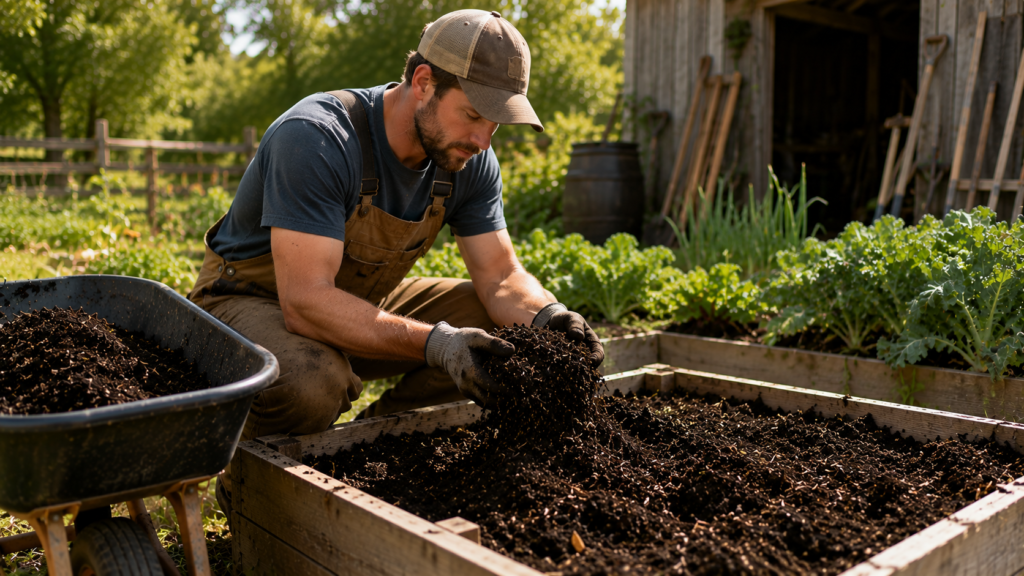
Choosing the best compost for raised garden beds can dramatically improve soil health, plant growth, moisture retention, and harvest size.
But not all compost is created equal.
Some composts are rich and balanced, while others may be too salty, too fresh, too dense, or lacking the nutrients plants need to thrive.
The best compost depends on your soil conditions, what you’re growing, and how you plan to use it in your raised bed.
Before purchasing compost, it’s helpful to know exactly how much material your project will require.
→ Compost Calculator – Imperial & Metric Units
Why Compost Matters in Raised Beds
Raised beds depend heavily on healthy soil.
Good compost helps:
- improve soil structure
- increase moisture retention
- feed plants naturally
- support beneficial microbes
- reduce compaction
- improve drainage
- boost vegetable yields
Because raised beds have limited soil volume, compost quality matters even more.
Best Types of Compost for Raised Garden Beds
Finished Compost
Best overall choice.
Finished compost is fully decomposed organic material that looks dark, crumbly, and earthy.
Best for:
- vegetable gardens
- raised beds
- annual soil refreshes
- mixing into new soil blends
Pros:
- balanced nutrients
- safe for plants
- improves structure
- excellent microbial activity
Cons:
- quality varies by source
Best overall option.
Mushroom Compost
Popular but should be used in moderation.
Best for:
- improving organic matter
- flower beds
- some vegetable gardens
Pros:
- rich in organic matter
- affordable
- improves texture
Cons:
- may contain higher salts
- can be alkaline
- not ideal as the only compost source
Best used mixed with other materials.
Homemade Compost
Excellent if done properly.
Best for:
- gardeners who compost regularly
- long-term soil building
- budget-conscious growers
Pros:
- essentially free
- customizable inputs
- rich biological activity
Cons:
- inconsistent quality
- may be unfinished
- can contain weed seeds if poorly managed
Fantastic when mature and fully finished.
Worm Castings (Vermicompost)
Premium compost amendment.
Best for:
- seedlings
- container gardens
- nutrient boosts
- raised beds
Pros:
- nutrient dense
- excellent microbial benefits
- gentle on plants
- improves root growth
Cons:
- expensive
- usually better as an additive, not bulk fill
Excellent booster compost.
Compost Types to Use Carefully
Manure-Based Compost
Can work well—but only if fully composted.
Good for:
- heavy feeders
- established beds
Potential issues:
- too “hot” if fresh
- possible odor
- weed seeds if improperly composted
Never use fresh manure directly in raised beds.
Municipal Compost
Often affordable and widely available.
Pros:
- low cost
- easy to source in bulk
Cons:
- quality varies greatly
- contamination risk in some regions
- inconsistent texture
Check supplier quality before buying large quantities.
Compost to Avoid
Avoid:
- fresh manure
- unfinished compost
- compost with strong ammonia smell
- unknown contaminated compost
- compost containing visible undecomposed food waste
Good compost should smell earthy—not sour or rotten.
Best Compost for Vegetable Raised Beds
Best options:
Tomatoes / Peppers
Prefer:
- finished compost
- manure-based compost (fully aged)
- worm castings blended in
Root Crops
Prefer lighter compost blends.
Too much rich compost can sometimes affect root development.
Good choices:
- finished compost
- leaf compost
Herbs
Most herbs prefer moderate fertility.
Use lighter compost applications.
Heavy Feeders
Best for:
- squash
- cucumbers
- corn
- melons
- brassicas
These benefit from richer compost inputs.
How Much Compost Should Be in Raised Bed Soil?
Good target:
20%–40% compost
Example raised bed blend:
- 60% topsoil
- 30% compost
- 10% aeration material
Too much compost can cause:
- excessive moisture retention
- nutrient imbalances
- poor drainage
- salt buildup in some composts
Balance matters.
Bagged vs Bulk Compost
Bagged Compost
Best for:
- small raised beds
- convenience
- cleaner projects
Pros:
- easy transport
- predictable sizing
- easier storage
Cons:
- more expensive
Bulk Compost
Best for:
- multiple raised beds
- large builds
- full soil refreshes
Pros:
- lower cost
- easier for larger projects
Cons:
- delivery logistics
- variable quality
Quick Buying Tips
Look for compost that is:
✅ dark brown to black
✅ crumbly texture
✅ earthy smell
✅ fully decomposed
✅ weed free
Avoid compost that feels:
❌ slimy
❌ foul smelling
❌ overly wet
❌ full of undecomposed chunks
Best Overall Compost Picks
Best overall:
Finished compost
Best budget:
Homemade compost
Best premium booster:
Worm castings
Best affordable bulk option:
Quality local compost
Helpful Gardening Guides
→ How Much Compost Do I Need for a Raised Bed?
→ Mushroom Compost vs Regular Compost: Which Is Better?
→ Can You Add Too Much Compost to a Garden?
→ How Often Should You Add Compost to a Vegetable Garden?
→ Can You Use Compost Instead of Soil in a Raised Bed?