
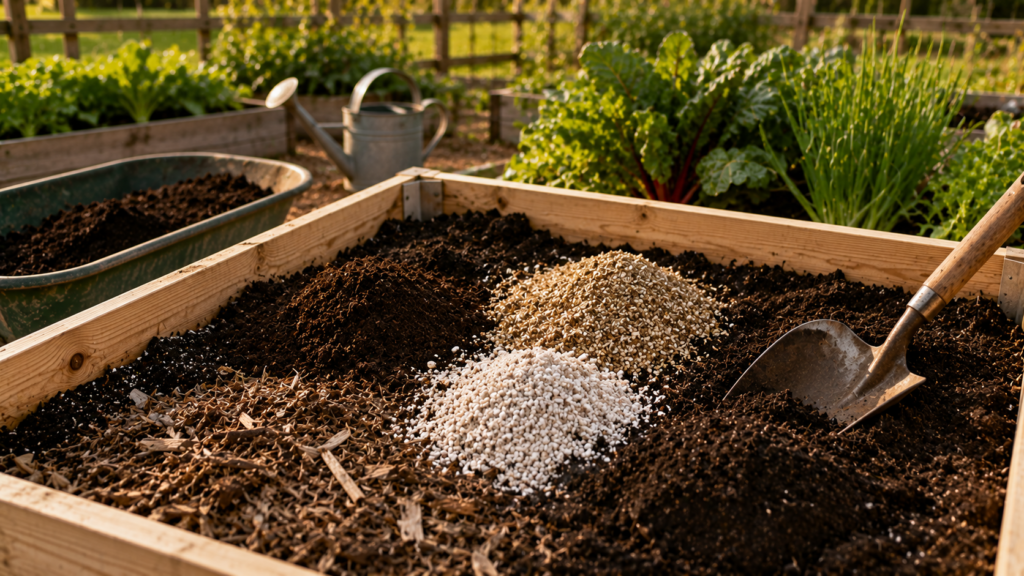
The best soil mix for raised garden beds combines topsoil, compost, and aeration materials to create the ideal environment for healthy root growth, strong drainage, and long-term fertility.
A well-balanced soil mix helps plants access nutrients, retain moisture, and avoid common problems like compaction and poor drainage. Whether you’re growing vegetables, herbs, flowers, or fruit, starting with the right soil blend can significantly improve your results.
Need to calculate exactly how much soil your raised bed requires?
→ Raised Bed Soil Calculator – Imperial & Metric Units
The Best Raised Bed Soil Mix Formula
A common and highly effective formula is:
- 60% topsoil
- 30% compost
- 10% aeration material
This same soil mix formula works whether you are using cubic feet or cubic meters.
For gardeners using metric measurements, the same raised bed mix can be calculated using liters, cubic meters, and standard bag sizes such as 40L and 50L compost bags.
Common Aeration Materials
- Coarse sand
- Perlite
- Vermiculite
- Pine fines
- Aged leaf mold
The exact material you choose depends on your climate, soil conditions, and gardening goals. This balance helps vegetables, herbs, flowers, and fruiting plants thrive without compacting or draining too quickly.
Why Plain Garden Soil Is Not Enough
Using only basic garden soil or inexpensive bagged topsoil often leads to poor drainage and compacted roots.
Raised beds perform best when soil remains loose, rich, and biologically active. Adding compost improves fertility, moisture retention, and beneficial microbial life, while aeration materials help prevent heavy, dense soil that can stunt plant growth.
The goal is healthy roots, not simply filling space.
Compost Is the Secret Ingredient
Compost is one of the most important components of a raised bed soil mix.
High-quality compost provides:
- Nutrients
- Beneficial microbes
- Improved moisture retention
- Stronger long-term soil health
Avoid using excessive amounts of unfinished compost or overly hot manure blends, especially around young plants and seedlings. Well-aged compost generally produces the best results.
Should You Use Topsoil or Potting Soil?
For most raised beds, topsoil is the better foundation.
Potting soil is lighter and works well in containers, but it becomes expensive and dries out more quickly when used in larger garden beds. A blended raised bed mix using quality topsoil and compost is usually the best long-term value.
Many gardeners purchase bagged raised bed soil products, but creating your own mix is often both cheaper and more effective.
Common Raised Bed Soil Mistakes
One of the biggest mistakes gardeners make is filling raised beds with the wrong soil.
Using only cheap bagged garden soil or heavy clay soil can create drainage problems and weak plant growth.
Another common mistake is building beds that are too shallow. Many vegetables require more root space than people expect.
Fresh wood chips should also not be used as the primary growing layer because they can temporarily reduce available nitrogen in the soil.
Building the right soil mix from the beginning saves money, improves harvests, and makes your raised bed garden much easier to maintain.
Frequently Asked Questions
What is the best soil mix for raised garden beds?
A proven formula is 60% topsoil, 30% compost, and 10% aeration material. This creates a balance of drainage, fertility, and moisture retention.
Can I fill a raised bed with only compost?
No. While compost is valuable, using only compost can lead to nutrient imbalances and drainage issues. A blended soil mix works better.
Can I use soil from my yard?
You can, but most native soils benefit from added compost and aeration materials to improve structure and drainage.
How deep should a raised garden bed be?
Most vegetables grow well in beds that are 10–12 inches deep, although larger root crops may benefit from deeper beds.
Helpful Gardening Guides
→ Topsoil vs Compost for Raised Beds
→ Raised Bed Depth Guide for Vegetables
→ How Much Soil Do I Need for a 4×8 Raised Bed?
→ How Many Bags of Soil Do I Need for a 4×8 Raised Bed?
→ Cheap Ways to Fill Raised Beds
→ Best Vegetables for Raised Beds