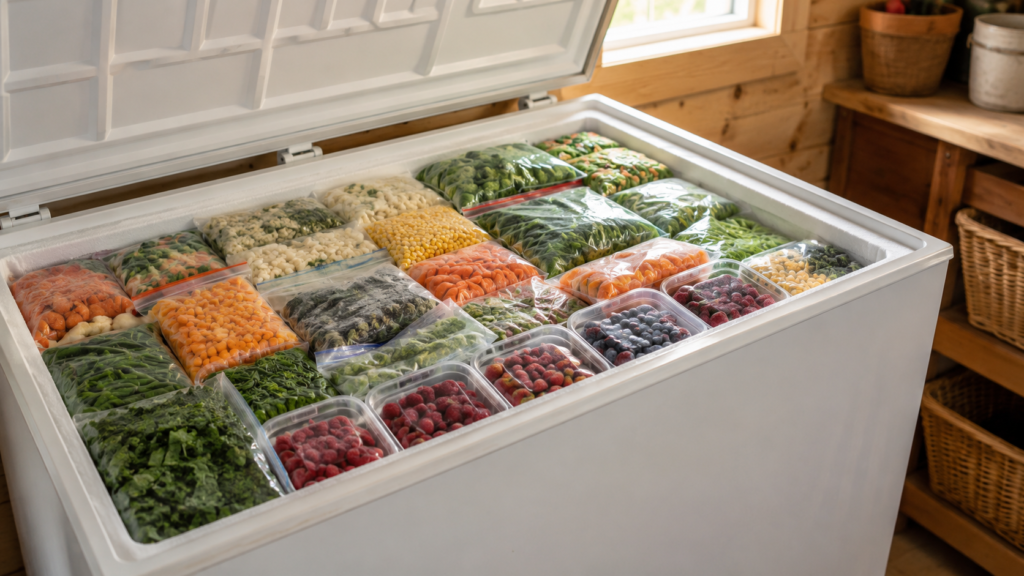
Many gardeners start the growing season focused on planting, watering, and harvesting. Then August arrives, tomatoes are piling up on the kitchen counter, peppers are filling baskets, and the freezer suddenly seems much smaller than it did in spring.
Running out of freezer space is one of the most common harvest-season surprises.
A little planning before the harvest begins can save frustration later and help you decide which crops should be frozen, canned, dehydrated, or fermented.
Whether you’re preserving food from a few raised beds or a larger homestead garden, understanding your freezer needs helps ensure that none of your hard-earned harvest goes to waste.
🌱 Estimate jars, freezer containers, dehydrator trays, and preservation yields before harvest season arrives.
→ Harvest Preservation Calculator
Why Freezer Space Fills Up So Quickly
Fresh produce contains a surprising amount of water.
While vegetables may seem compact in the garden, preserving them often requires more storage space than expected.
A productive tomato patch, for example, can generate dozens of pounds of fruit over a few weeks. The same is true for peppers, corn, berries, green beans, and many other crops.
Many gardeners discover that a freezer which seemed half empty in June can be completely full by September.
Which Crops Take Up the Most Freezer Space?
Some crops are naturally bulkier than others.
Tomatoes
Whole tomatoes and tomato sauce can quickly consume freezer space.
Many gardeners choose to can at least part of their tomato harvest for this reason.
Green Beans
Green beans preserve well in the freezer but require considerable room when stored in large quantities.
Corn
Corn is one of the biggest freezer-space consumers in the garden.
A productive corn patch can easily fill multiple shelves.
Peppers
Peppers freeze exceptionally well and can be stored whole, sliced, or diced.
Fortunately, they are relatively compact compared to some other crops.
Berries
Berries preserve beautifully in the freezer but can add up quickly during peak harvest season.
Typical Freezer Sizes
Understanding freezer capacity makes planning much easier.
Small Freezer (5 Cubic Feet)
Good for:
- Small gardens
- Apartment gardeners
- Supplemental food storage
Typical capacity:
- 150 to 200 pounds of food
Medium Freezer (10 to 15 Cubic Feet)
Good for:
- Average family gardens
- Moderate preservation projects
Typical capacity:
- 300 to 500 pounds of food
Large Freezer (20+ Cubic Feet)
Good for:
- Large gardens
- Homesteads
- Families preserving significant quantities of food
Typical capacity:
- 600+ pounds of food
Actual storage capacity varies depending on packaging methods and the shape of stored items.
When Freezing Makes the Most Sense
Freezing works particularly well for:
- Peppers
- Berries
- Corn
- Herbs
- Apples
- Prepared sauces
Many gardeners choose freezing because it is fast, simple, and preserves excellent flavor.
It is often the easiest preservation method for beginners.
When Other Preservation Methods Save Space
One of the advantages of the Harvest Preservation Calculator is seeing alternative preservation options.
Canning
Canned foods require shelf space instead of freezer space.
Tomatoes, green beans, salsa, and pickles are popular examples.
Dehydrating
Dehydration dramatically reduces volume.
Several pounds of tomatoes can become a small container of dried tomatoes or tomato powder.
Fermenting
Fermentation creates shelf-stable or refrigerated foods while using very little freezer capacity.
Cabbage and cucumbers are excellent examples.
How Experienced Gardeners Preserve Large Harvests
Most experienced gardeners do not rely on a single preservation method.
Instead, they spread the harvest across multiple techniques.
For example:
- Tomatoes may be canned and frozen
- Peppers may be frozen and dehydrated
- Herbs may be dehydrated
- Cabbage may be fermented
- Cucumbers may be pickled
Using several preservation methods prevents any one storage system from becoming overloaded.
Common Freezer Planning Mistakes
Waiting Until Harvest Season
Many people think about freezer space only after vegetables begin piling up.
Planning early gives you more flexibility.
Freezing Everything
Not every crop needs to be frozen.
Some vegetables are often better suited to canning, dehydrating, or fermenting.
Poor Organization
A disorganized freezer wastes valuable storage space.
Clearly labeled containers make a significant difference.
Forgetting Future Harvests
It is easy to fill a freezer with early-season crops and forget that tomatoes, peppers, and fall vegetables are still coming.
Leave room for later harvests.
Frequently Asked Questions
How much freezer space does a garden require?
The answer depends on garden size and what crops you grow. Small gardens may only require a few cubic feet, while large homestead gardens can easily justify a dedicated chest freezer.
Is freezing cheaper than canning?
Freezing often requires less equipment upfront, but it depends on electricity and available freezer space.
Which vegetables freeze best?
Peppers, corn, berries, herbs, and many prepared sauces freeze exceptionally well.
Should I buy a chest freezer for gardening?
If you regularly preserve large harvests, a chest freezer can be one of the most useful investments you make.
Is freezing the best preservation method?
Not necessarily. Many gardeners combine freezing, canning, dehydrating, and fermentation to maximize storage efficiency.
Harvest Preservation Guides
→ Best Vegetables for Canning at Home
→ Best Foods for Dehydrating From Your Garden
→ Canning vs Freezing: Which Preservation Method Is Better?
→ How Long Do Home-Canned Foods Last?
→ Beginner’s Guide to Fermenting Vegetables
→ Harvest Preservation Calculator
Conclusion
Freezer space is easy to underestimate during planting season and surprisingly easy to run out of during harvest season. A little planning ahead can help you decide which crops to freeze, which to can, and which might be better suited for dehydration or fermentation.
The most successful gardeners rarely depend on a single preservation method. By combining freezing with canning, dehydrating, and fermenting, you can preserve more of your harvest while making the best use of your available storage space.