Every gardener eventually faces the same happy problem: too much food and not enough time to eat it all fresh.
When tomatoes are ripening by the basket, green beans seem to appear overnight, and peppers are filling every spare bowl in the kitchen, it’s time to start preserving the harvest.
For most gardeners, the choice comes down to two popular methods: canning and freezing.
Both work well. Both can preserve food for months. But each has advantages that make it better suited for certain situations.
The best method depends on the crop, the amount of storage space available, and how you plan to use the food later.
🌱 Estimate jars, freezer containers, dehydrator trays, and preservation yields before harvest season arrives.
→ Harvest Preservation Calculator
The Biggest Difference Between Canning and Freezing
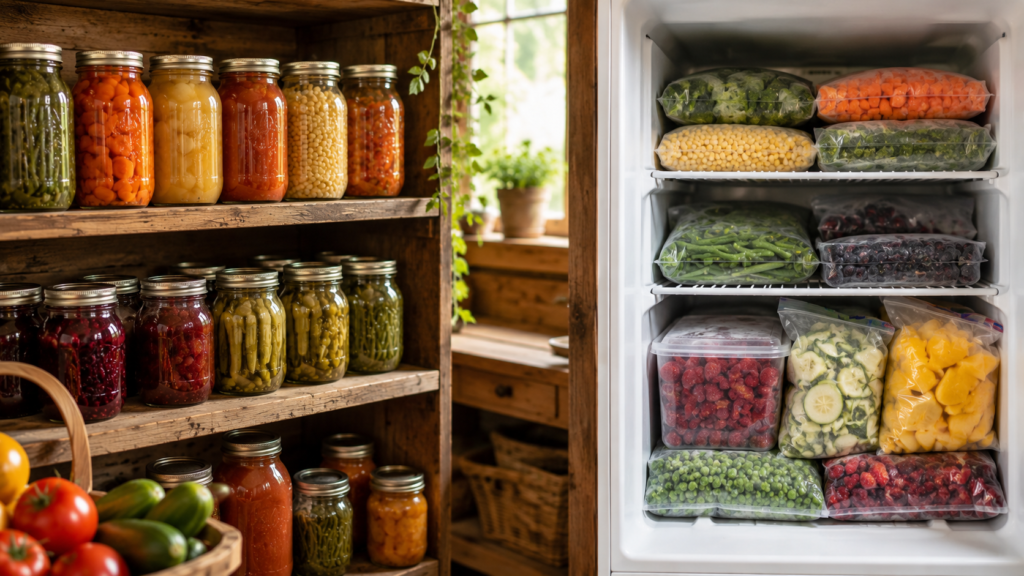
The simplest difference is storage.
Canned foods are stored on a shelf.
Frozen foods are stored in a freezer.
That one distinction influences almost every other consideration.
Canning requires more preparation and equipment upfront, but the finished product doesn’t require electricity for storage.
Freezing is faster and easier, but it depends on having enough freezer space and reliable power.
For many homesteaders, both methods have a place in the pantry.
When Canning Makes More Sense
Canning is often the better choice when long-term storage is the goal.
A properly canned jar of tomatoes or green beans can sit on a pantry shelf for many months without requiring refrigeration.
Canning is especially useful for:
- Tomatoes
- Tomato sauce
- Salsa
- Pickles
- Green beans
- Relishes
- Soups
Advantages of canning:
- No freezer space required
- No ongoing electricity costs
- Long storage life
- Easy pantry organization
- Excellent for emergency food storage
The biggest drawback is the time involved. Washing jars, preparing food, processing jars, and cooling everything afterward can turn into a full-day project during peak harvest season.
When Freezing Makes More Sense
Freezing is often the easiest way to preserve food.
Many vegetables require little more than washing, cutting, and packaging before they go into the freezer.
Freezing works particularly well for:
- Peppers
- Berries
- Corn
- Herbs
- Tomatoes
- Apples
Advantages of freezing:
- Fast preparation
- Minimal equipment
- Excellent flavor retention
- Less initial cost
- Great for beginners
Many gardeners start with freezing simply because it’s easy.
A busy weekend harvest can often be preserved in a fraction of the time required for canning.
Which Method Preserves Flavor Better?
In many cases, freezing wins.
Because foods are not exposed to the high temperatures used during canning, frozen vegetables often retain more of their original texture and flavor.
Peppers, berries, and herbs are excellent examples.
However, some foods actually benefit from canning.
Tomato sauces, salsa, pickles, and relishes often develop deeper flavors after processing and storage.
The best choice often depends on the crop.
Which Method Is More Affordable?
The answer depends on how long you plan to preserve food.
Canning Costs
Initial equipment:
- Canner
- Jars
- Lids
- Jar lifter
- Other accessories
After the initial investment, jars can be reused for many years.
Freezing Costs
Initial equipment:
- Freezer bags
- Containers
- Freezer space
The larger cost comes later through electricity use and freezer maintenance.
For gardeners preserving food regularly, both methods are relatively economical compared to purchasing similar foods from a store.
Which Method Is Better for Beginners?
For most people, freezing is the easiest place to start.
The learning curve is much smaller.
There are no processing times to calculate and no concerns about proper canning procedures.
Freezing allows beginners to gain confidence while preserving food successfully.
Once gardeners become comfortable preserving harvests, many eventually add canning to their skill set.
Common Mistakes to Avoid
Trying to Preserve Everything the Same Way
Not every crop is best suited for the same method.
Tomatoes might be canned.
Peppers might be frozen.
Herbs might be dehydrated.
Choose the method that fits the crop.
Waiting Too Long
Fresh produce preserves best when processed shortly after harvest.
The longer vegetables sit on the counter, the more quality declines.
Forgetting Storage Space
Many gardeners fill a freezer quickly during peak harvest season.
Planning ahead prevents unpleasant surprises.
Ignoring Future Use
Think about how you’ll use the food later.
A quart jar of tomato sauce may be more convenient than several frozen bags of chopped tomatoes.
Which Crops Are Best for Each Method?
Best for Canning
- Tomatoes
- Green beans
- Cucumbers
- Salsa
- Pickles
- Relishes
Best for Freezing
- Peppers
- Berries
- Corn
- Herbs
- Apples
Great Either Way
- Tomatoes
- Beans
- Corn
- Apples
Many experienced gardeners use multiple preservation methods throughout the season.
Frequently Asked Questions
Is canning safer than freezing?
Both methods are safe when proper procedures are followed. The key is following tested canning recipes and maintaining proper freezer temperatures.
Which method lasts longer?
Properly canned foods can remain shelf-stable for many months. Frozen foods generally maintain best quality for 8 to 12 months.
Does freezing destroy nutrients?
No. Frozen foods retain much of their nutritional value and often preserve nutrients very well.
Is canning worth the extra work?
For many gardeners, yes. Canning eliminates the need for freezer space and creates pantry-ready foods that are easy to store.
Can you use both methods?
Absolutely. Many homesteaders can tomatoes, freeze peppers, dehydrate herbs, and ferment cabbage during the same season.
Harvest Preservation Guides
→ Best Vegetables for Canning at Home
→ Best Foods for Dehydrating From Your Garden
→ How Long Do Home-Canned Foods Last?
→ Beginner’s Guide to Fermenting Vegetables
→ How Much Freezer Space Do You Need for a Garden Harvest?
→ Harvest Preservation Calculator
Conclusion
There is no single best preservation method for every garden harvest. Canning and freezing both have strengths, and most experienced gardeners eventually find themselves using a combination of the two.
If shelf-stable storage is your priority, canning often makes the most sense. If speed and simplicity matter most, freezing is hard to beat. The best approach is the one that helps you preserve more of your harvest and enjoy it long after the growing season ends.