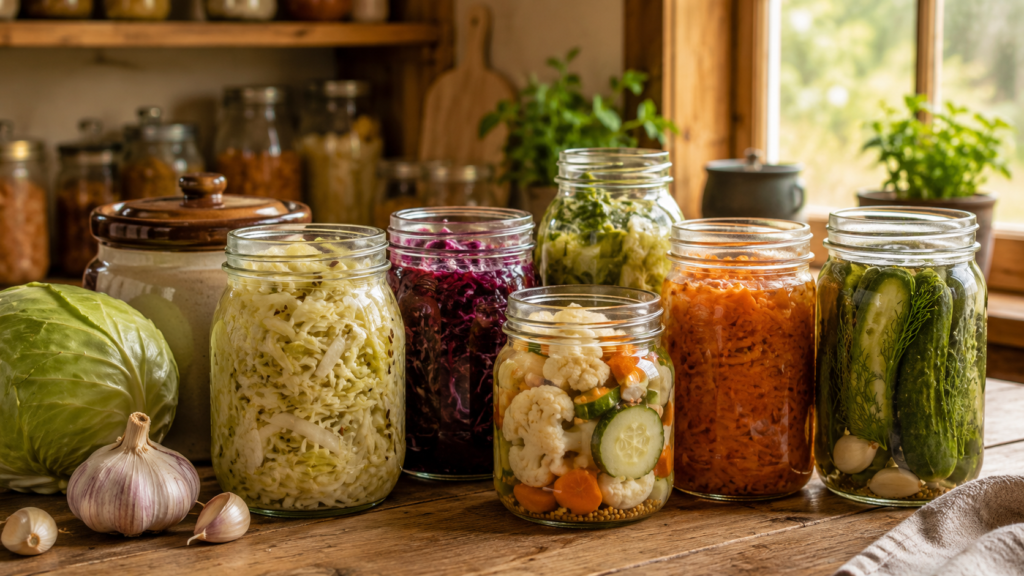
Long before freezers, dehydrators, and pressure canners existed, people were preserving food through fermentation.
Today, fermentation remains one of the simplest and most rewarding ways to preserve a garden harvest. With little more than vegetables, salt, water, and time, you can create flavorful foods that last for weeks or even months.
If you’ve ever enjoyed sauerkraut, kimchi, or fermented pickles, you’ve already experienced fermentation at work.
The process may sound intimidating at first, but it’s surprisingly beginner-friendly once you understand the basics.
🌱 Estimate jars, freezer containers, dehydrator trays, and preservation yields before harvest season arrives.
→ Harvest Preservation Calculator
What Is Fermentation?
Fermentation is a natural preservation process that uses beneficial bacteria to convert sugars into acids.
As the vegetables ferment, the increasing acidity helps preserve the food while creating the tangy flavors many people enjoy.
Unlike canning, fermentation doesn’t require heat.
Unlike freezing, it doesn’t require electricity.
Instead, nature does most of the work.
Why Gardeners Love Fermentation
Many homesteaders consider fermentation one of the easiest forms of food preservation.
Benefits include:
- Minimal equipment
- No pressure canner required
- No freezer space needed
- Excellent use of large harvests
- Distinctive flavors
- Long storage life
For crops like cabbage and cucumbers, fermentation is often one of the most popular preservation methods.
Best Vegetables for Beginners
Some vegetables are particularly forgiving and easy to ferment.
Cabbage
Cabbage is often considered the ideal beginner fermentation project.
With nothing more than shredded cabbage and salt, you can make traditional sauerkraut.
Cucumbers
Fermented pickles are simple, flavorful, and a great introduction to the process.
Peppers
Both sweet and hot peppers ferment well and can later be used for sauces, relishes, and seasoning blends.
Onions
Onions add flavor to mixed vegetable ferments and can also be fermented on their own.
Basic Equipment You’ll Need
One reason fermentation has remained popular for centuries is its simplicity.
Most beginners need:
- Glass jars
- Salt
- Clean water
- A weight to keep vegetables submerged
- A lid or fermentation cover
Many gardeners start with equipment they already have in their kitchen.
The Basic Fermentation Process
Most vegetable ferments follow the same general steps.
Step 1: Prepare the Vegetables
Wash and trim vegetables as needed.
Slice, shred, or leave whole depending on the recipe.
Step 2: Add Salt
Salt helps create an environment where beneficial bacteria thrive.
Step 3: Keep Vegetables Submerged
Vegetables should remain below the surface of the brine.
Exposure to air is one of the most common causes of problems.
Step 4: Wait
This is often the hardest step.
Fermentation takes time.
Many vegetable ferments begin developing flavor within a few days and continue improving over several weeks.
Common Beginner Mistakes
Using Too Little Salt
Salt plays an important role in successful fermentation.
Follow tested recipes when starting out.
Letting Vegetables Float
Anything exposed to air can develop unwanted mold.
Keeping vegetables submerged is one of the most important parts of the process.
Storing in Direct Sunlight
Most ferments perform best in a cool location away from direct sunlight.
Giving Up Too Soon
Fermentation is a gradual process.
Many beginners become concerned when they see bubbles or cloudy brine, even though both are often signs that fermentation is working properly.
What Should Fermentation Look Like?
Healthy fermentation often includes:
- Small bubbles
- Cloudy brine
- Pleasant sour aroma
- Gradual flavor changes
These are normal signs that beneficial bacteria are doing their job.
How Long Do Fermented Vegetables Last?
Storage life varies depending on the vegetable and storage conditions.
In general:
- Refrigerator storage extends shelf life significantly.
- Many fermented vegetables remain enjoyable for several months.
- Flavor continues to develop over time.
Most gardeners find the food gets eaten long before storage becomes an issue.
Frequently Asked Questions
Is fermentation safe?
Yes, when proper techniques are followed. Salt, acidity, and beneficial bacteria help create a safe preservation environment.
What is the easiest vegetable to ferment?
Cabbage is often considered the easiest because it naturally releases enough liquid to create its own brine.
Do I need special equipment?
No. Many beginners successfully start with simple glass jars and basic kitchen supplies.
Why is my brine cloudy?
Cloudy brine is usually a normal sign of active fermentation.
How do I know when fermentation is finished?
The best guide is taste. Once the flavor reaches the level you enjoy, move the ferment to colder storage to slow the process.
Harvest Preservation Guides
→ Best Vegetables for Canning at Home
→ Best Foods for Dehydrating From Your Garden
→ Canning vs Freezing: Which Preservation Method Is Better?
→ How Long Do Home-Canned Foods Last?
→ How Much Freezer Space Do You Need for a Garden Harvest?
→ Harvest Preservation Calculator
Conclusion
Fermentation is one of the oldest and simplest food preservation methods available to gardeners and homesteaders. With just a few basic supplies and a little patience, crops like cabbage, cucumbers, peppers, and onions can be transformed into flavorful foods that store well and add variety to the pantry.
For beginners, fermentation offers a low-cost, approachable way to preserve part of the harvest while learning a skill that has been passed down through generations.