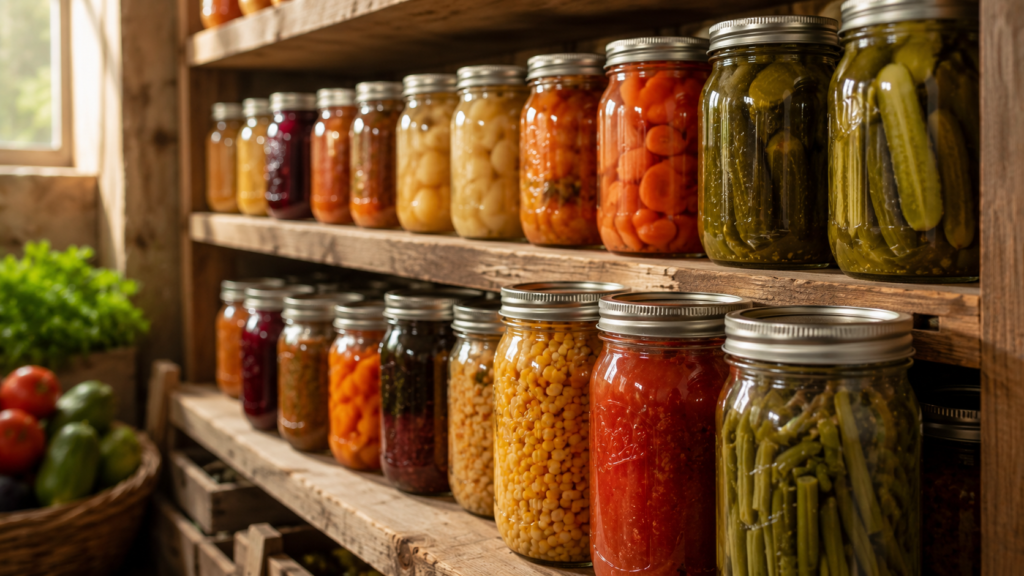
One of the most common questions new canners ask is simple:
How long will all of these jars actually last?
After spending hours washing produce, preparing recipes, filling jars, and processing them, it’s natural to want confidence that the food will still be worth eating months later.
The good news is that properly canned foods have an impressive shelf life. Whether you’re preserving tomatoes, green beans, pickles, or homemade salsa, canning remains one of the most effective ways to store food without relying on freezer space or electricity.
Understanding how long home-canned foods last—and how to store them properly—helps you get the most from every harvest.
🌱 Estimate jars, freezer containers, dehydrator trays, and preservation yields before harvest season arrives.
→ Harvest Preservation Calculator
The Short Answer
Most home-canned foods maintain their best quality for 12 to 18 months.
That doesn’t mean they suddenly become unsafe after a year.
In many cases, properly sealed jars remain safe much longer. However, flavor, texture, color, and nutritional quality gradually decline over time.
Think of the 12 to 18 month guideline as a “best quality” recommendation rather than a hard expiration date.
For most gardeners and homesteaders, using canned foods within a year keeps pantry shelves rotating and ensures the best eating experience.
What Affects Shelf Life?
Several factors influence how long home-canned foods remain at peak quality.
Storage Temperature
Cool storage conditions help preserve quality.
A basement pantry, cool storage room, or interior closet generally works better than a garage or shed that experiences large temperature swings.
Light Exposure
Direct sunlight gradually degrades food quality.
Store jars in a dark location whenever possible.
Processing Method
Foods processed according to tested recipes generally maintain quality longer than foods preserved using unverified methods.
Seal Quality
A strong seal is essential.
A properly sealed jar protects food from contamination and helps maintain quality during storage.
Typical Shelf Life of Common Home-Canned Foods
While individual recipes vary, these general guidelines are useful for planning purposes.
Tomatoes
Best quality:
12 to 18 months
Examples:
- Crushed tomatoes
- Tomato sauce
- Diced tomatoes
Pickles
Best quality:
12 to 18 months
Examples:
- Dill pickles
- Bread and butter pickles
- Pickled peppers
Green Beans
Best quality:
12 to 18 months
Pressure-canned green beans generally hold their quality well when stored properly.
Salsa
Best quality:
12 months
Because salsa contains multiple ingredients, flavor quality tends to decline a bit faster than plain canned vegetables.
Jams and Preserves
Best quality:
12 to 24 months
High sugar content often helps maintain quality for longer periods.
Signs a Jar Should Be Discarded
When in doubt, throw it out.
Never taste food to determine whether it is safe.
Discard any jar that shows:
- Bulging lids
- Broken seals
- Leaking contents
- Unusual odors
- Mold growth
- Excessive bubbling
- Spurting liquid when opened
A failed jar is never worth the risk.
Best Storage Practices
A few simple habits can dramatically improve storage life.
Label Every Jar
Always write:
- Contents
- Month canned
- Year canned
Good labeling prevents older jars from getting forgotten at the back of the shelf.
Practice First In, First Out
Use older jars before newer jars.
This simple system keeps pantry inventory rotating naturally.
Avoid Extreme Temperatures
Heat is one of the biggest enemies of canned food quality.
Consistently cool temperatures help preserve flavor, color, and texture.
Keep Jars Clean
Dust and food residue on jar exteriors can make it harder to inspect seals and identify potential issues.
Common Beginner Mistakes
Saving Jars for Too Long
Many new canners become attached to their first successful batches.
Don’t be afraid to enjoy your hard work.
The goal is to eat preserved food, not create a museum collection.
Removing Labels
A mystery jar rarely gets used.
Clear labeling saves confusion later.
Storing Food in the Garage
Summer heat and winter freezing temperatures can dramatically reduce quality.
Indoor storage is usually the better choice.
Ignoring Seal Checks
Always inspect the lid before opening a jar.
A quick visual inspection takes only a few seconds.
Frequently Asked Questions
Are home-canned foods safe after two years?
Many properly sealed jars remain safe beyond two years, but quality often declines. For best flavor and texture, most canners aim to use food within 12 to 18 months.
Do canned tomatoes last longer than canned vegetables?
Storage times are generally similar, although quality varies by recipe and storage conditions.
Should canned food be refrigerated?
Unopened jars should be stored in a cool, dark location. Once opened, refrigerate and use within several days.
Can canned food freeze?
Freezing temperatures can damage seals and affect food quality. Avoid storing jars where freezing may occur.
What is the biggest cause of quality loss?
Heat exposure is often the biggest factor. Cooler storage conditions help maintain quality much longer.
Harvest Preservation Guides
→ Best Vegetables for Canning at Home
→ Best Foods for Dehydrating From Your Garden
→ Canning vs Freezing: Which Preservation Method Is Better?
→ Beginner’s Guide to Fermenting Vegetables
→ How Much Freezer Space Do You Need for a Garden Harvest?
→ Harvest Preservation Calculator
Conclusion
One of the greatest rewards of canning is opening a jar months after harvest and enjoying food from your own garden long after the growing season has ended.
Most home-canned foods maintain their best quality for 12 to 18 months when stored properly. By keeping jars cool, dark, clean, and well organized, you can enjoy the fruits of your labor throughout the year while keeping your pantry stocked with homegrown goodness.