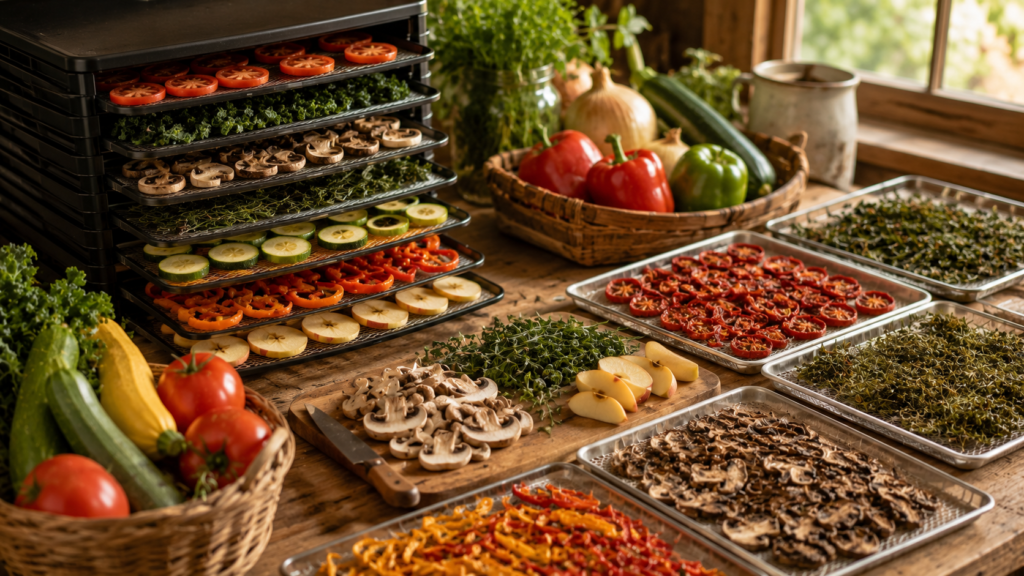
One of the biggest surprises for new gardeners is just how much food a productive garden can produce.
A few tomato plants suddenly become baskets of tomatoes. Herb beds seem to explode overnight. Peppers, beans, apples, and berries often arrive faster than a family can eat them fresh.
That’s where dehydration becomes one of the most useful preservation methods available. By removing moisture, you can dramatically reduce storage space while extending the life of your harvest for months.
Some foods dehydrate exceptionally well, while others are better suited for canning or freezing. Understanding the difference helps you get the best results from your garden.
🌱 Estimate dehydrator trays, drying yields, and preservation options before harvest season arrives.
→ Harvest Preservation Calculator
Why Dehydration Works So Well
Unlike freezing, dehydrated foods don’t require electricity for storage.
Unlike canning, you don’t need jars, lids, or processing equipment.
Removing moisture dramatically reduces both weight and volume while preserving much of the food’s flavor and nutritional value.
A five-gallon bucket of tomatoes can often be reduced to a fraction of its original size once dried.
For gardeners with limited freezer space, dehydration can be one of the most efficient preservation methods available.
Vegetables That Dehydrate Well
Certain vegetables consistently produce excellent results in a dehydrator.
Tomatoes
Tomatoes are one of the most popular foods to dehydrate.
They can be dried as slices, halves, or ground into tomato powder after drying. The flavor becomes concentrated, making them useful in soups, sauces, and seasoning blends.
Peppers
Both sweet and hot peppers dry extremely well.
Many gardeners dry peppers to create homemade chili powders, pepper flakes, and seasoning blends that last throughout the year.
Onions
Onions shrink dramatically when dried and take up very little storage space.
Dried onions can be stored as flakes or ground into onion powder for cooking.
Green Beans
Green beans can be dehydrated and later added to soups, stews, and emergency food storage supplies.
Cabbage
While often fermented, cabbage can also be dried successfully and added to soup mixes or long-term pantry storage.
Fruits That Dehydrate Well
Fruit is often the easiest category for beginners.
Apples
Apple slices dry consistently and make excellent snacks.
They’re also useful in oatmeal, baking, and homemade trail mixes.
Berries
Strawberries, blueberries, raspberries, and blackberries all dehydrate well.
Drying concentrates their sweetness and creates a shelf-stable snack that stores far longer than fresh berries.
Herbs That Dehydrate Well
Herbs are often the gateway into food dehydration.
Basil
One productive basil plant can provide enough dried herbs to season meals for months.
Oregano
Oregano retains its flavor exceptionally well after drying.
Thyme
Thyme dries quickly and stores beautifully.
Rosemary
Rosemary’s naturally low moisture content makes it one of the easiest herbs to preserve.
Parsley
Parsley is simple to grow, simple to dry, and useful in countless recipes.
Best Foods for Beginners
If you’re new to dehydration, start simple.
The easiest foods for beginners are:
- Herbs
- Apple slices
- Tomatoes
- Peppers
These crops require minimal preparation and consistently produce good results.
Success with these foods builds confidence before moving on to larger batches and more complicated projects.
Common Dehydrating Mistakes
Overloading Trays
Airflow is essential for proper drying.
Crowding trays can significantly increase drying times and reduce quality.
Storing Food Before It’s Fully Dry
Even small amounts of remaining moisture can shorten storage life.
Always allow food to cool before checking for final dryness.
Poor Storage Containers
Airtight containers help preserve flavor and prevent moisture from re-entering dried foods.
Ignoring Crop Quality
The dehydrator cannot improve poor produce.
Start with fresh, healthy fruits and vegetables for the best results.
Dehydrator vs Oven Drying
Many gardeners begin with their kitchen oven.
Oven Drying
Advantages:
- No additional equipment
- Works for occasional projects
- Good for small batches
Dehydrators
Advantages:
- Better temperature control
- More consistent drying
- Larger capacity
- More energy efficient
For gardeners who preserve food regularly, a dehydrator quickly becomes one of the most useful tools in the homestead kitchen.
Frequently Asked Questions
What is the easiest food to dehydrate?
Herbs and apple slices are usually the easiest foods for beginners because they dry consistently and require little preparation.
Do you need a dehydrator to dry food?
No. Many foods can be dried in a conventional oven set to a low temperature, although a dedicated dehydrator often produces better results.
How long do dehydrated foods last?
Many dehydrated foods last a year or longer when stored properly in airtight containers away from heat, moisture, and sunlight.
Do dehydrated foods lose nutrition?
Some nutrients are lost during the drying process, but dehydrated foods still retain much of their original nutritional value.
What foods should not be dehydrated?
Foods that contain large amounts of fat generally do not store well because fats can become rancid over time.
Harvest Preservation Guides
→ Best Vegetables for Canning at Home
→ Canning vs Freezing: Which Preservation Method Is Better?
→ How Long Do Home-Canned Foods Last?
→ Beginner’s Guide to Fermenting Vegetables
→ How Much Freezer Space Do You Need for a Garden Harvest?
→ Harvest Preservation Calculator
Conclusion
Dehydration remains one of the simplest ways to preserve a garden harvest. It requires little storage space, minimal equipment, and works well for a wide variety of fruits, vegetables, and herbs.
Whether you’re drying a handful of basil from a raised bed or preserving an overflowing tomato harvest, dehydration helps turn seasonal abundance into food you can enjoy long after the growing season ends.