Cheap ways to fill raised beds can save a surprising amount of money, especially when you’re building deeper beds or multiple raised garden beds.
Many gardeners are surprised by how much soil a single 4×8 raised bed actually requires.
The good news is that you do not need to fill the entire bed with expensive premium garden soil.
There are several smart and affordable ways to reduce costs while still creating a healthy growing environment for vegetables, herbs, and flowers.
The key is understanding that most plants only need high-quality growing soil in the top 8 to 12 inches where the majority of roots develop.
Before choosing a filling method, it helps to know exactly how much soil your raised bed will require.
→ Raised Bed Soil Calculator – Imperial & Metric Units
Use Organic Fill Materials at the Bottom
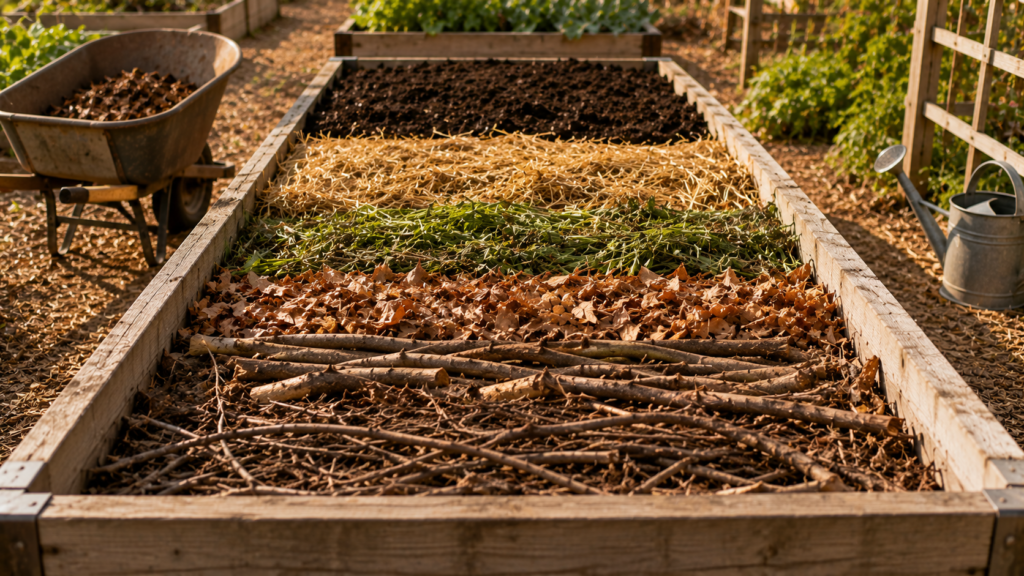
One of the cheapest ways to fill deep raised beds is by using natural organic materials in the lower portion of the bed.
Common options include:
- leaves
- grass clippings
- untreated branches
- logs
- straw
- pine needles
- untreated wood chips
- cardboard
- shredded paper
These materials slowly break down over time and improve soil structure while reducing the amount of expensive topsoil needed.
This method is often called hugelkultur-style filling and works especially well in taller raised beds.
Use Bulk Topsoil Instead of Bagged Soil
Buying dozens of small soil bags from a garden center is often the most expensive option.
Instead, many gardeners save significant money by ordering bulk topsoil, compost, or raised bed mix from local landscape supply companies.
Bulk delivery often costs much less per cubic yard than bagged soil and works much better for larger gardens.
For multiple raised beds, bulk soil is usually the best value.
Many gardeners outside the United States buy soil by the cubic meter instead of the cubic yard.
Using a calculator that supports both imperial and metric measurements helps compare pricing more accurately and prevents overbuying expensive soil.
Mix Compost With Topsoil
Pure raised bed mix can be expensive.
A better approach is blending quality topsoil with compost.
A common and effective mix is:
- 60% topsoil
- 30% compost
- 10% aeration material
This improves drainage, fertility, and moisture retention while reducing total cost.
Good compost improves soil biology and helps long-term garden health.
Avoid These Common Money-Wasting Mistakes
One of the biggest mistakes is filling the entire bed with expensive potting soil.
Potting soil is designed for containers and can become extremely expensive for raised beds.
Avoid using treated wood scraps, trash, or materials that may introduce chemicals into your garden.
Fresh wood chips should also not be used as the main growing layer because they can temporarily reduce available nitrogen for plants.
Building smart from the beginning saves money and improves harvests.
Helpful Gardening Guides
→ Best Soil Mix for Raised Garden Beds
→ Topsoil vs Compost for Raised Beds
→ How Much Soil Do I Need for a 4×8 Raised Bed?
→ How Many Bags of Soil Do I Need for a 4×8 Raised Bed?
→ Raised Bed Depth Guide for Vegetables
→ Best Vegetables for Raised Beds