
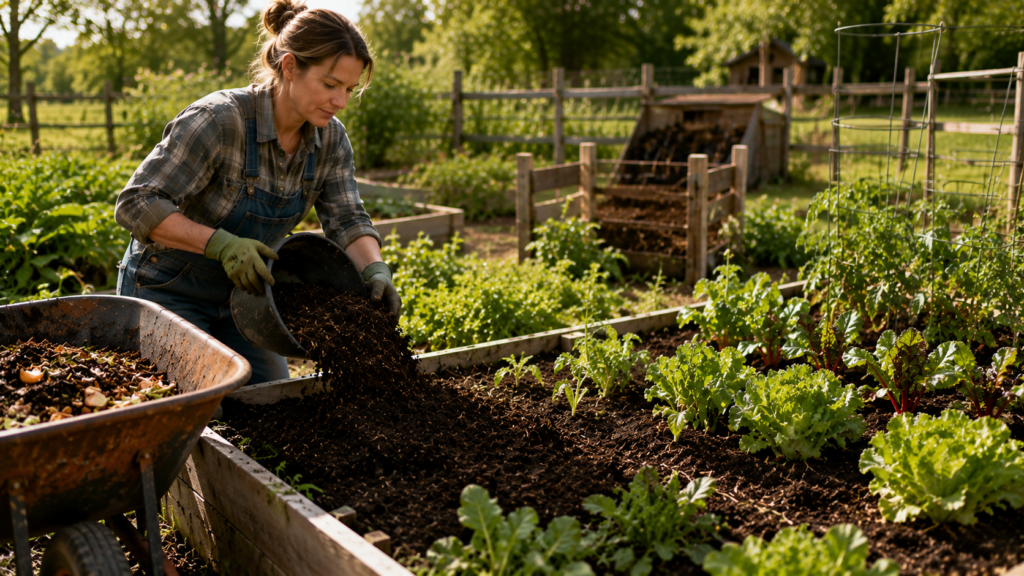
How often should you add compost to a vegetable garden? The answer depends on your soil quality, the crops you’re growing, and how intensively your garden is used.
Regular compost applications can improve soil structure, support beneficial microbial activity, and help maintain long-term fertility.
However, adding compost too frequently or in excessive amounts can contribute to nutrient imbalances and overly rich soil conditions.
Finding the right balance helps vegetables thrive while keeping soil healthy year after year.
Not sure how much compost your garden needs?
→ Compost Calculator – Imperial & Metric Units
Quick Answer
For most vegetable gardens:
✅ Add compost once or twice per year
Typical schedule:
- Spring: before planting
- Fall: after harvest (optional)
General application rates:
- 1–2 inches annually for maintenance
- 2–3 inches when improving poor soil initially
For raised beds:
lighter yearly applications are usually best.
Best Times to Add Compost
Spring (Best for Most Gardens)
Spring is the most common time to add compost.
Why?
It helps:
- refresh nutrients before planting
- improve soil structure
- support beneficial microbes
- boost moisture retention
How:
Spread compost across the bed and lightly mix into the top few inches.
Fall (Excellent Optional Bonus)
Fall composting gives organic matter time to continue breaking down over winter.
Benefits:
- improved spring soil texture
- more active soil biology
- less spring prep work
Especially useful for:
- in-ground vegetable gardens
- beds with depleted soil
- heavy clay areas
Raised Beds vs In-Ground Gardens
Raised Beds
Raised beds generally need compost yearly.
Because raised beds are intensively planted, nutrients are used faster.
Recommended:
1–2 inches once per year
Avoid repeatedly adding heavy amounts.
Raised beds can become overly rich more quickly.
In-Ground Vegetable Gardens
In-ground gardens may need:
- yearly compostorevery other year, depending on soil quality
Poor soils benefit from more frequent improvement.Established healthy soils may need less.
Signs Your Garden Needs Compost
Your garden may benefit from compost if:
- soil feels compacted
- water drains poorly
- plants seem weak
- yields have declined
- soil looks lifeless
- beds dry out too quickly
Signs You May Be Adding Too Much
Watch for:
- excessive leafy growth
- weak fruit production
- constantly soggy soil
- nutrient imbalance concerns
- salt buildup (with some compost types)
More compost isn’t always better.
What About Containers?
Containers are different.Rather than repeatedly topdressing heavily, it’s often better to refresh potting mixes periodically.Small compost additions can help, but avoid making containers compost-heavy.
Common Mistakes
Adding Huge Amounts Every Season
Frequent heavy applications can create problems.
Moderation wins.
Using Compost Alone
Compost is an amendment—not usually a complete growing medium.
Blend it with proper soil.
Ignoring Soil Conditions
Every garden is different.
Clay, sandy, raised bed, and established soil all behave differently.
Final Verdict
For most vegetable gardens:
Once per year is ideal.
Twice yearly can help struggling or depleted soil.
The key is consistency—not overdoing it.
A modest yearly compost application will usually outperform occasional heavy dumping.
Helpful Gardening Guides
→ How Much Compost Do I Need for a Raised Bed?
→ Can You Add Too Much Compost to a Garden?
→ Best Compost for Raised Garden Beds
→ Mushroom Compost vs Regular Compost: Which Is Better?
→ Can You Use Compost Instead of Soil in a Raised Bed?