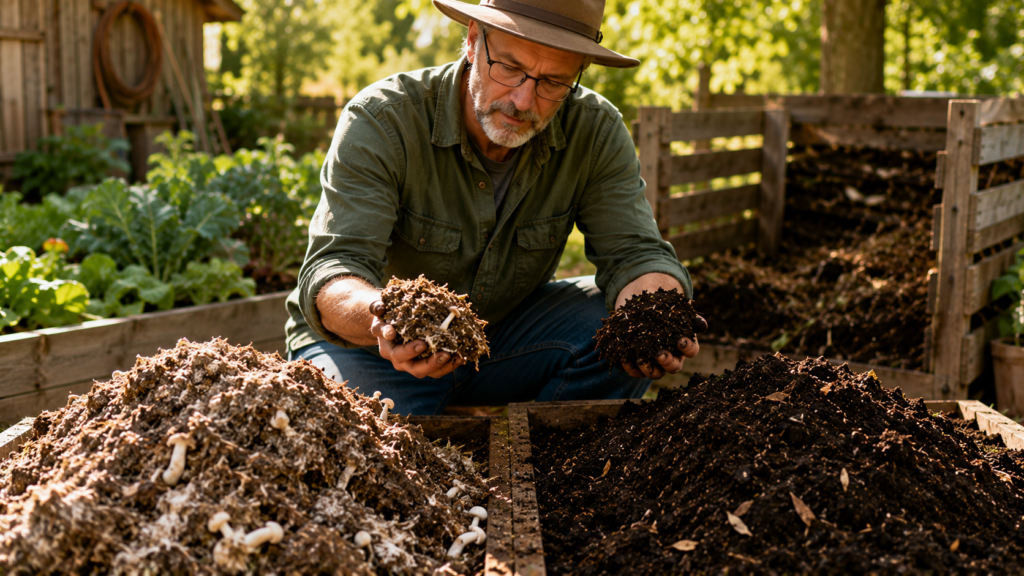
If you’re comparing mushroom compost vs regular compost, you may be wondering which option is actually better for your garden.
The answer depends on what you’re growing, your soil conditions, and how you plan to use the compost.
Both can improve soil health, add organic matter, and support stronger plant growth, but they are not identical.
Understanding the differences can help you choose the right compost for raised beds, vegetable gardens, flower beds, and general soil improvement.
Before purchasing compost, it’s helpful to know exactly how much material your project will require.
→ Compost Calculator – Imperial & Metric Units
Quick Answer
Regular compost is usually the better all-purpose choice for most gardens.
Mushroom compost can be excellent for improving soil structure and adding nutrients, but it may contain higher soluble salts and a slightly alkaline pH, making it less ideal for some plants.
In short:
✅ Regular compost: best all-around option
✅ Mushroom compost: great for many gardens, but use strategically
What Is Mushroom Compost?
Mushroom compost (sometimes called spent mushroom substrate) is the leftover growing medium used by commercial mushroom farms.
It often contains materials such as:
- straw
- hay
- poultry manure
- gypsum
- corn cobs
- organic plant material
After mushroom production, the material is composted and sold as a soil amendment.
Despite the name, it doesn’t usually contain actual mushrooms.
What Is Regular Compost?
Regular compost is decomposed organic matter created from mixed natural materials such as:
- leaves
- grass clippings
- food scraps
- plant debris
- aged manure
- yard waste
Because ingredients vary, compost quality can differ between brands and homemade piles.
Good compost should be:
- dark
- crumbly
- earthy smelling
- mostly broken down
Side-by-Side Comparison
Nutrient Content
Mushroom Compost
- often richer in some nutrients
- can contain residual salts
- nutrient profile varies
Regular Compost
- more balanced overall
- less likely to create salt issues
- nutrient levels vary widely
Winner: Regular compost for general use
pH Level
Mushroom Compost
Typically more alkaline.
This can be helpful for acidic soils.
Not ideal for acid-loving plants.
Regular Compost
Usually closer to neutral.
Better universal compatibility.
Winner: Regular compost
Water Retention
Both improve moisture retention.
Mushroom compost can be particularly effective at improving heavy clay soil texture.
Winner: Tie
Raised Beds
Regular compost is usually the safer choice for raised vegetable beds.
Mushroom compost can work, but avoid making it the primary soil ingredient.
Winner: Regular compost
Cost
Pricing depends on region.
Bulk mushroom compost can sometimes be cheaper.
Bagged products vary.
Winner: Depends locally
Best Uses for Mushroom Compost
Mushroom compost works well for:
- improving poor soil
- mixing into garden beds
- topdressing ornamental beds
- enriching clay-heavy soil
- boosting organic matter
Use more cautiously around:
- seedlings
- salt-sensitive plants
- blueberries
- azaleas
- rhododendrons
Best Uses for Regular Compost
Regular compost is ideal for:
- vegetable gardens
- raised beds
- containers (mixed properly)
- annual flowers
- soil building
- general garden improvement
Can You Mix Them?
Yes.
Many gardeners combine both.
A blend can provide:
- improved texture
- organic matter
- nutrient support
Just avoid overdoing mushroom compost in sensitive growing areas.
Final Verdict
If you want the safest all-purpose choice:
Regular compost wins.
If you’re improving difficult soil and understand its limitations:
Mushroom compost can be excellent.
For most home gardeners, either can be useful when used correctly.
Helpful Gardening Guides
→ Best Compost for Raised Garden Beds
→ Can You Use Compost Instead of Soil in a Raised Bed?
→ How Much Compost Do I Need for a Raised Bed?
→ Can You Add Too Much Compost to a Garden?
→ How Often Should You Add Compost to a Vegetable Garden?