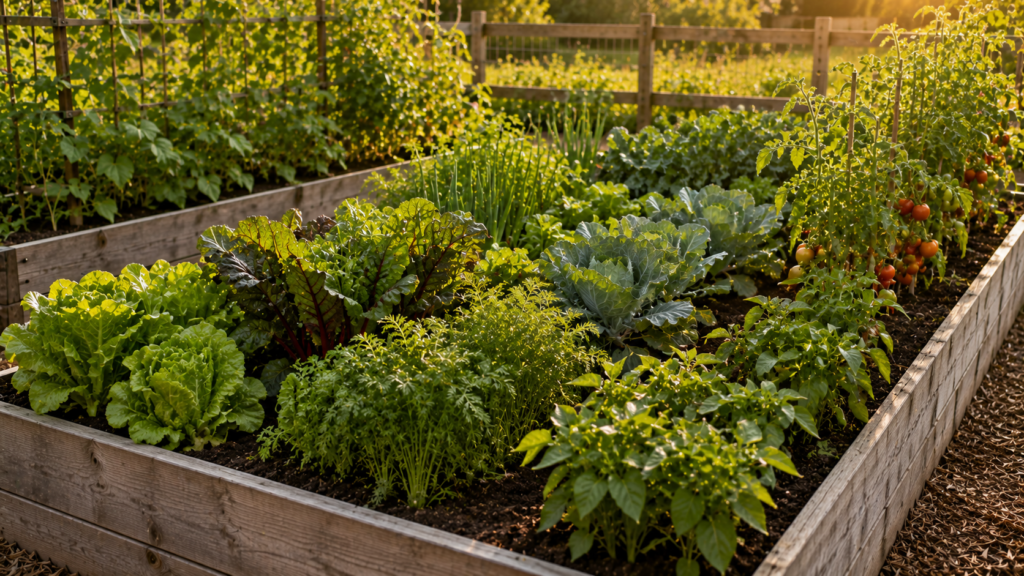
The best vegetables for raised beds are crops that thrive in loose, nutrient-rich soil with good drainage and controlled growing conditions.
But not every vegetable performs equally well in raised beds.
Some crops thrive with the loose, rich soil and controlled growing space, while others need deeper beds or more room to spread.
Choosing the right vegetables helps maximize harvests and makes raised bed gardening much easier for beginners.
Need to calculate soil volume first? Try our Raised Bed Soil Calculator.
→ Raised Bed Soil Calculator – Imperial & Metric Units
Best Easy Vegetables for Raised Beds
Some of the easiest and most productive vegetables for raised beds include:
- spinach
- kale
- carrots
- radishes
- green beans
- bush tomatoes
- peppers
- onions
- cucumbers
- zucchini
- herbs like basil, parsley, and cilantro
These crops perform especially well because they benefit from improved drainage, loose soil, and easier weed control.
They are also great for beginner gardeners.
Best Root Vegetables for Raised Beds
Raised beds are excellent for root crops because the soil is usually softer and less compacted.
Great root vegetables include:
- carrots
- beets
- radishes
- onions
- garlic
- potatoes
- sweet potatoes
- turnips
- parsnips
Deeper raised beds often produce better results for root vegetables because roots can grow straighter and larger without hitting compacted ground. If you’re unsure how deep your bed should be, see our Raised Bed Depth Guide for Vegetables.
Best Vegetables for Small Raised Beds
If space is limited, focus on high-value crops that produce often and fit smaller growing areas.
Excellent small-space choices include:
- lettuce
- spinach
- herbs
- peppers
- green onions
- bush beans
- strawberries
- compact tomato varieties
Vertical growing also helps maximize small raised beds.
Cucumbers, pole beans, and some squash varieties can grow upward using simple trellises.
Vegetables That Need Deeper Raised Beds
Some vegetables perform best with more root depth.
Examples include:
- full-size tomatoes
- potatoes
- carrots
- corn
- asparagus
- rhubarb
- fruit bushes
For these crops, 12 to 18 inches of bed depth often produces stronger growth and better harvests.
Planning bed depth before planting saves a lot of frustration later.
For gardeners using metric measurements, a standard raised bed depth of 12 inches is about 30 centimeters, while deeper crops often perform better with 40 to 45 centimeters of growing depth.
Choosing the right bed depth improves both harvest size and long-term plant health.
Helpful Gardening Guides
→ Raised Bed Depth Guide for Vegetables
→ Best Soil Mix for Raised Garden Beds
→ Topsoil vs Compost for Raised Beds
→ How Much Soil Do I Need for a 4×8 Raised Bed?
→ How Many Bags of Soil Do I Need for a 4×8 Raised Bed?
→ Cheap Ways to Fill Raised Beds